
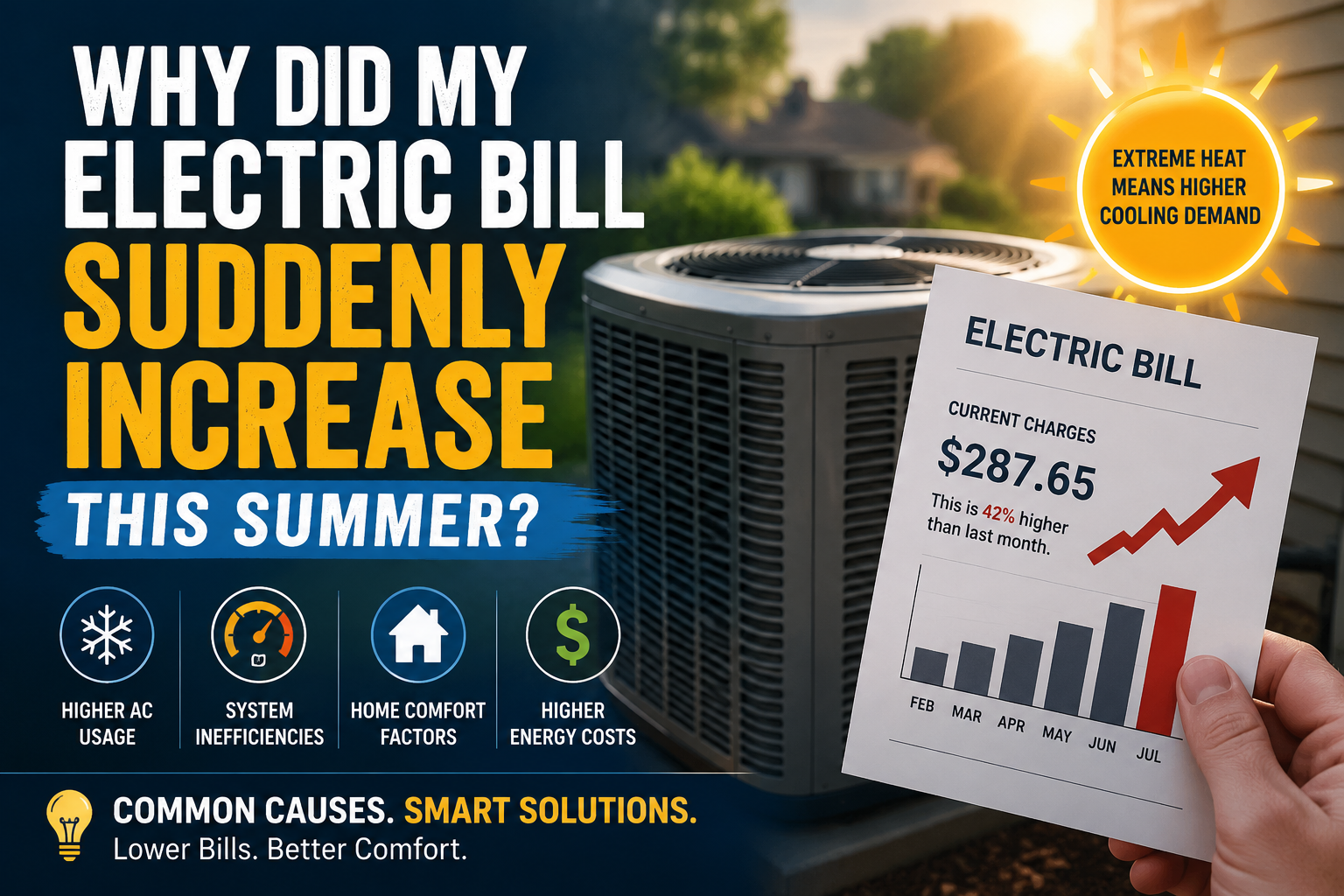
If your electric bill suddenly increased this summer, your air conditioner may be working harder than it should. While hot weather naturally increases cooling demand, a significant jump in energy costs often points to efficiency problems, maintenance issues, or aging HVAC equipment.
Quick Answer
A sudden increase in your electric bill is often caused by an air conditioner running longer than necessary due to dirty filters, low refrigerant, aging equipment, thermostat issues, poor insulation, or deferred maintenance. Identifying the cause early can help prevent higher operating costs and unnecessary system wear.
Fast Decision Guide
Bill Up Slightly?
Higher temperatures and increased AC usage may be responsible.
Bill Up Dramatically?
An HVAC efficiency issue may be causing excessive energy use.
Older AC System?
Aging equipment often becomes significantly less efficient over time.
Why Homeowners Call 1st Choice Heating & Cooling
- Licensed and insured HVAC technicians
- Residential cooling system specialists
- Serving Waukesha and surrounding communities
- Same-day service available in many cases
- Honest recommendations focused on efficiency and comfort
Why Summer Electric Bills Often Spike
Your air conditioner is typically the largest energy consumer in your home during summer.
When outdoor temperatures rise, cooling systems naturally run longer. However, if your bill increases far beyond normal seasonal changes, the system may be operating inefficiently.
The challenge is determining whether the increase is weather-related or a sign that your HVAC system needs attention.
Common Reasons Your Electric Bill Increased
Dirty Air Filters
One of the simplest causes is also one of the most common.
A clogged filter restricts airflow, forcing the system to work harder.
- Longer cooling cycles
- Higher energy use
- Reduced airflow
- Increased system strain
Air Conditioner Running Constantly
If your system never seems to shut off, it may be struggling to maintain indoor temperatures.
You may also want to read:
Why Is My AC Running Constantly But Not Cooling My House?
Low Refrigerant Levels
When refrigerant levels are low, cooling efficiency drops and the system runs longer to achieve the same results.
Dirty Condenser Coils
The outdoor unit must release heat effectively.
When condenser coils become dirty, cooling performance declines and energy consumption increases.
Aging Equipment
Older systems often consume significantly more electricity than newer, high-efficiency equipment.
If your system is approaching the end of its expected lifespan, you may benefit from reviewing:
How Long Do Air Conditioners Last in Wisconsin?
How HVAC Problems Affect Utility Costs
| Issue | Potential Energy Impact |
|---|---|
| Dirty Air Filter | Higher run times and reduced airflow |
| Low Refrigerant | Significant efficiency loss |
| Dirty Coils | Poor heat transfer |
| Aging Equipment | Higher monthly operating costs |
| Thermostat Problems | Unnecessary cooling cycles |
Things You Can Check First
- Replace the air filter
- Verify thermostat settings
- Inspect outdoor equipment for debris
- Check for blocked supply vents
- Compare usage to previous summers
- Schedule maintenance if overdue
Can You Wait or Should You Schedule Service?
Usually OK To Monitor
Minor bill increase during unusually hot weather.
Schedule Service Soon
Noticeably higher bills combined with reduced cooling performance.
Call Immediately
Warm air, frozen coils, unusual noises, or significant cooling loss.
What We Commonly See During Wisconsin Summers
Many homeowners first notice HVAC issues when utility bills arrive.
Systems that appear to be cooling normally may actually be running significantly longer than necessary due to dirty filters, deferred maintenance, refrigerant issues, or age-related efficiency decline.
Can Maintenance Lower Energy Bills?
In many cases, yes.
Routine maintenance helps identify issues before they become larger efficiency problems.
Benefits often include:
- Improved airflow
- Cleaner coils
- Better system performance
- Reduced equipment strain
- Lower operating costs
When High Energy Bills May Point Toward Replacement
If your system is older and utility costs continue increasing every year, replacement may be worth evaluating.
Common indicators include:
- System is 15+ years old
- Frequent repair visits
- Cooling performance decline
- Consistently rising energy costs
- Major component wear
High Electric Bill FAQs
Can my air conditioner cause my electric bill to increase?
Yes. Cooling systems are often the largest contributor to summer energy usage.
Will changing my air filter reduce energy costs?
A clean filter can improve airflow and help the system operate more efficiently.
Can low refrigerant increase energy bills?
Yes. The system often runs longer and works harder when refrigerant levels are low.
Why is my AC running all day?
Restricted airflow, refrigerant issues, dirty coils, or aging equipment may be responsible.
How often should AC maintenance be performed?
Most homeowners benefit from annual professional maintenance.
When should I replace an older AC system?
If repairs become frequent and operating costs continue rising, replacement may provide better long-term value.
Concerned About Rising Cooling Costs?
If your electric bill has increased unexpectedly and your air conditioner seems to be working harder than normal, the simplest next step is scheduling a professional inspection to identify the cause.
