
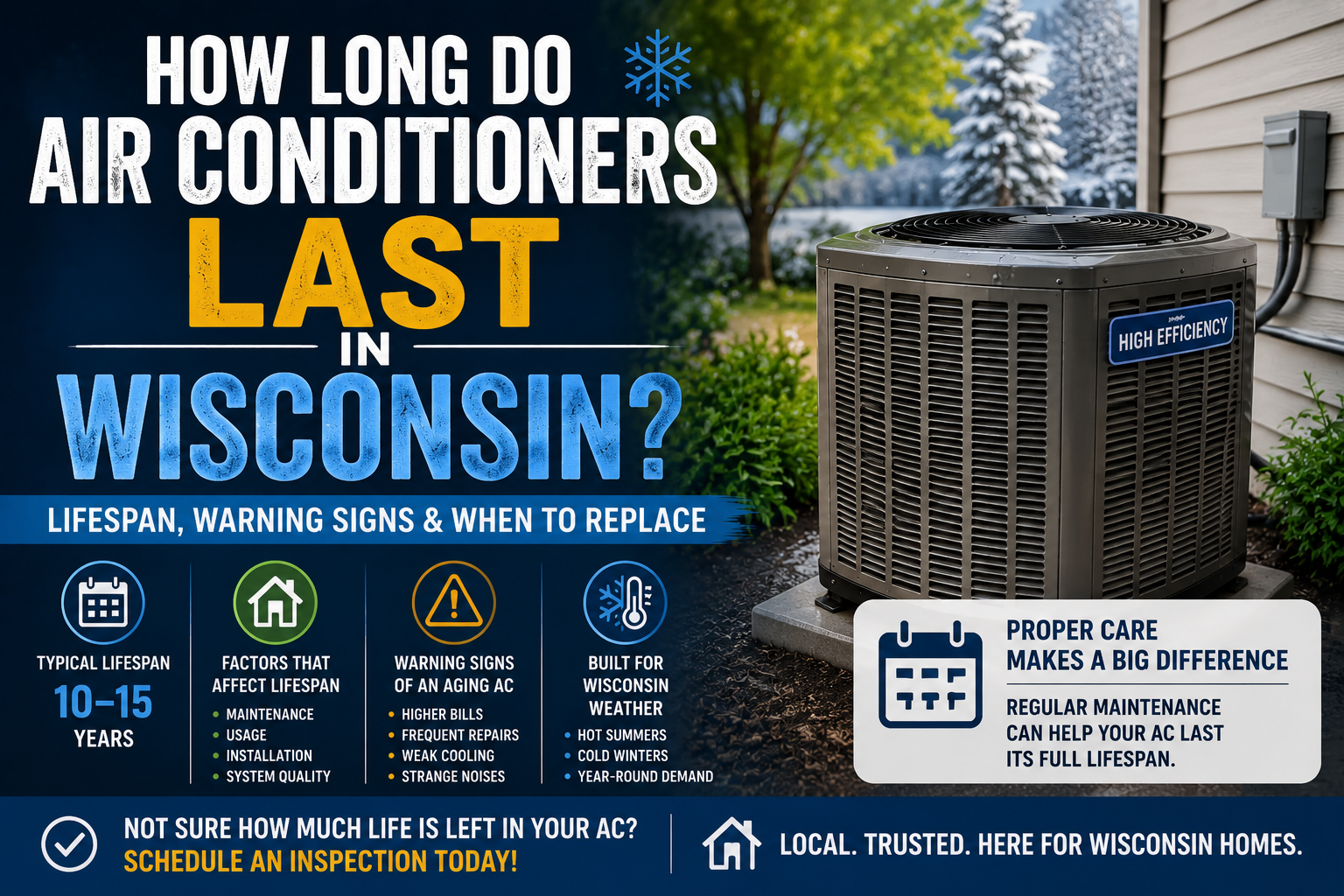
Most air conditioners last between 10 and 15 years, but lifespan depends heavily on maintenance, usage, installation quality, and weather conditions. In Wisconsin, where systems often sit idle for part of the year and then work hard during summer heat waves, some units exceed 15 years while others struggle much sooner.
Quick Answer
Most residential air conditioners last 10–15 years. Systems that receive regular maintenance often last longer, while neglected units may experience major failures much sooner. If your AC is over 12 years old and beginning to require repairs, it may be time to evaluate replacement options.
Fast Decision Guide
Less Than 10 Years Old?
Most systems still have useful life remaining if repairs are relatively minor.
10–15 Years Old?
Pay close attention to repair frequency, efficiency, and overall performance.
15+ Years Old?
Major repairs often make replacement worth serious consideration.
Why Homeowners Call 1st Choice Heating & Cooling
- Licensed and insured HVAC technicians
- Residential cooling system specialists
- Honest repair-versus-replacement guidance
- Serving Waukesha and surrounding communities
- Same-day service available in many cases
How Long Should an Air Conditioner Last?
While manufacturers often advertise equipment lifespan estimates, actual performance depends on how the system is used and maintained.
Two identical systems installed the same year can age very differently based on maintenance history, installation quality, filter changes, and operating conditions.
That’s why age alone should never determine whether replacement is necessary.
Average Air Conditioner Lifespan
| System Age | Typical Condition |
|---|---|
| 0–5 Years | Usually operating near peak efficiency |
| 6–10 Years | Normal wear begins appearing |
| 10–15 Years | Repairs become more common |
| 15+ Years | Replacement evaluation often recommended |
What Affects AC Lifespan?
Maintenance History
Routine maintenance remains one of the biggest factors influencing equipment longevity.
- Regular tune-ups
- Clean coils
- Filter replacement
- Electrical inspections
- Refrigerant monitoring
Installation Quality
Improper sizing or installation mistakes can shorten equipment life from the beginning.
An oversized or undersized system often experiences unnecessary stress and reduced efficiency.
Operating Conditions
Long periods of extreme summer heat force systems to work harder and can accelerate wear on key components.
Airflow Restrictions
Dirty filters, blocked vents, and ductwork issues increase strain on the entire cooling system.
Signs Your Air Conditioner May Be Nearing the End of Its Life
Frequent Repairs
Repeated service calls often indicate growing system wear.
Higher Utility Bills
Declining efficiency typically increases operating costs.
Uneven Cooling
Some rooms may remain uncomfortable despite long run times.
Struggling During Hot Weather
Older systems often have difficulty keeping up during peak summer temperatures.
What Delaying Replacement Can Cost
| Issue | Potential Impact |
|---|---|
| Older Equipment | Higher energy consumption |
| Repeated Repairs | Growing maintenance expenses |
| Declining Efficiency | Increased utility bills |
| Unexpected Breakdown | Emergency replacement pressure |
Repair or Replace?
Usually Repair
System under 10 years old with a minor repair need.
Evaluate Carefully
System 10–15 years old requiring moderate repairs.
Consider Replacement
System over 15 years old with major component failures.
What We Commonly See in Wisconsin Homes
Many Wisconsin homeowners begin considering replacement between years 12 and 15. Systems often continue operating beyond that point, but efficiency, comfort, and reliability can decline noticeably.
The most common triggers are rising energy bills, repeated repair visits, and difficulty maintaining indoor temperatures during the hottest weeks of summer.
If your air conditioner is aging and repairs are becoming more common, it may be worth comparing repair costs against long-term replacement value.
When AC Replacement May Make More Financial Sense
- System is more than 15 years old
- Major repairs are needed
- Cooling performance continues declining
- Utility bills have increased significantly
- Repair costs are becoming frequent
Serving Homeowners Throughout Southeastern Wisconsin
1st Choice Heating & Cooling provides cooling services throughout:
Muskego
New Berlin
West Allis
Franklin
Oak Creek
Pewaukee
Greenfield
AC Lifespan FAQs
How long do air conditioners usually last?
Most residential air conditioners last between 10 and 15 years.
Can an AC last 20 years?
Some well-maintained systems do, but efficiency and reliability often decline significantly.
Should I replace a 15-year-old air conditioner?
If major repairs are needed, replacement is often worth evaluating.
What shortens AC lifespan?
Poor maintenance, airflow restrictions, improper installation, and heavy system strain.
Does regular maintenance help an AC last longer?
Yes. Preventative maintenance can significantly improve system longevity.
How do I know if replacement is better than repair?
Age, repair costs, efficiency, and reliability should all be considered together.
Are newer air conditioners more efficient?
Modern systems are generally much more energy efficient than older equipment.
Not Sure Whether Your AC Has Years Left?
If your system is getting older and you’re wondering whether repairs still make sense, the simplest next step is a professional evaluation. You’ll get a clearer picture of the system’s condition and your available options.
