How Much Does Air Duct Cleaning Cost in Wisconsin?
The useful answer is not one flat number. Air duct cleaning prices depend on how many HVAC systems and vents the home has, what the written scope includes, how accessible the ductwork is, and whether cleaning is actually the correct response to the problem.
What Is a Realistic Air Duct Cleaning Budget?
$271–$509
Published 2026 national consumer data places many residential air duct cleaning projects between $271 and $509, with a broader reported range of $150 to $800. Treat that as planning context—not a Wisconsin quote. Larger homes, multiple HVAC systems, extensive ductwork, difficult access, heavy buildup, related repairs, and add-on services can raise the total. The only reliable comparison is a written estimate that defines exactly what will be cleaned.
The Six Factors That Change Air Duct Cleaning Cost
Two houses with similar square footage can receive different estimates because the cleaning work follows the HVAC system—not just the floor plan. Compare the system count, duct layout, access, condition, and included components before deciding whether one quote is actually less expensive.
Number of HVAC Systems
A home with two furnaces or air handlers usually has more trunk lines, returns, branches, components, and setup work than a comparable single-system home.
Supply Vents and Returns
More registers and return pathways usually mean more duct branches and more cleaning time. Ask whether both supply and return sides are included.
Duct Layout and Access
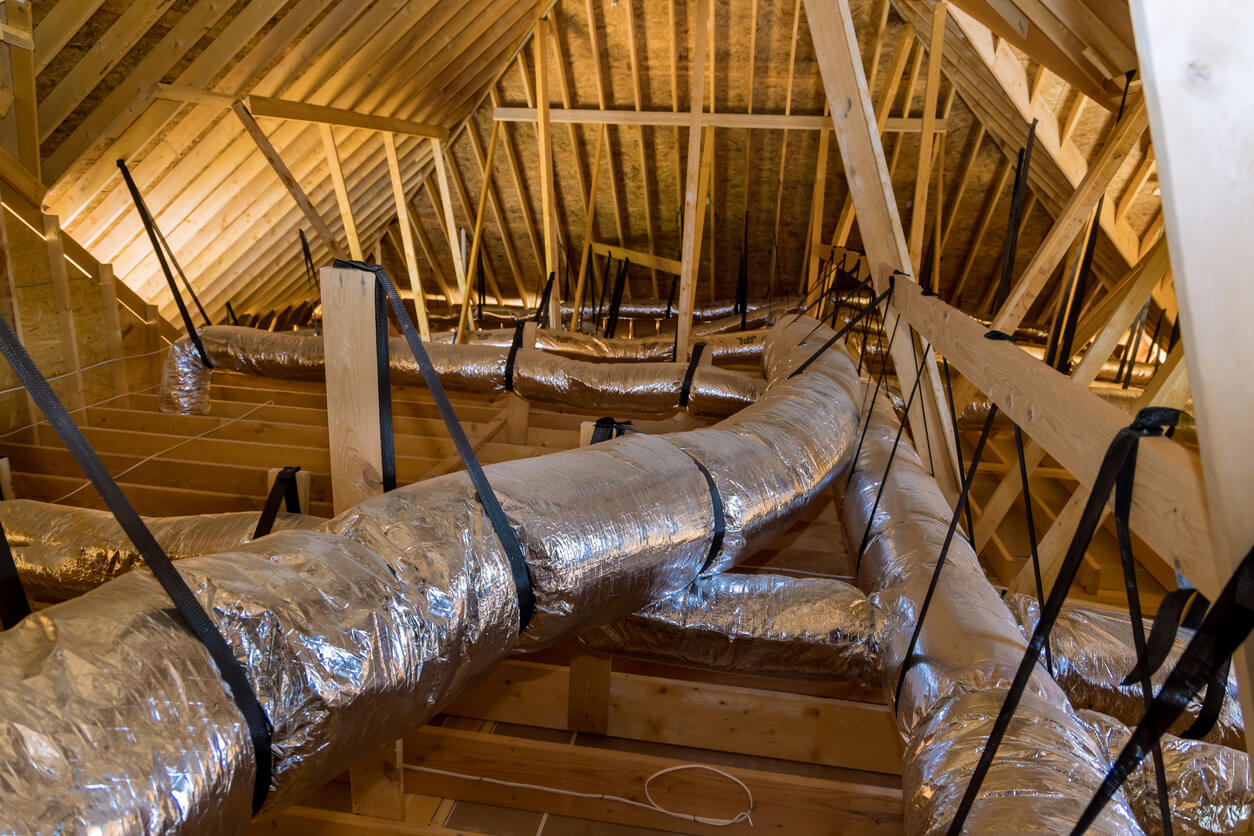
Long runs, finished basements, tight mechanical rooms, attics, crawl spaces, multiple floors, and limited access can change the labor and equipment required.
Duct Material and Condition
Bare sheet metal, flexible duct, duct board, and internally lined ducts require different handling. Fragile, damaged, wet, or contaminated material may need repair or replacement rather than aggressive cleaning.
Amount and Type of Debris
Ordinary settled dust is different from construction debris, pest activity, moisture damage, or suspected biological growth. The source should be identified before the scope is priced.
Services Included
Registers, trunk lines, branch ducts, return ducts, blower compartments, coils, access openings, dryer vents, sanitizers, and repairs may be included, excluded, or priced separately.
A Lower Price Is Not a Better Deal When the Scope Is Smaller
A quote that covers only visible registers is not comparable to a quote that addresses the accessible supply and return system. Before comparing totals, make both companies answer the same questions: How many systems are included? Which ducts and components will be cleaned? How will debris be contained? Are access openings sealed afterward? What could create an additional charge?
What Should an Air Duct Cleaning Estimate Include?
| Estimate detail | Why it changes the value | Question to ask |
|---|---|---|
| HVAC system count | Each furnace or air handler may serve a separate duct system and require separate setup. | How many complete systems are included? |
| Supply and return ductwork | A register-only service does not represent the full accessible air-distribution system. | Does the scope include supply branches, returns, and main trunks? |
| HVAC components | Blower, cabinet, coil, drain pan, and other component work may be separate from duct cleaning. | Which equipment components are included or excluded? |
| Access and sealing | Some systems require new access openings. Those openings should be closed and sealed appropriately afterward. | Will access openings be created, and how will they be sealed? |
| Containment and equipment | The process should keep removed debris from being released into the living area. | How will the system be placed under vacuum and the home protected? |
| Documentation | Photos or a visual walkthrough can show initial conditions and completed work. | Will I be shown what justified cleaning and what was cleaned? |
| Add-ons and exclusions | Dryer vents, repairs, pest work, mold assessment, coatings, and chemical treatments are separate decisions. | What could increase the approved total? |
Is Air Duct Cleaning Worth the Cost?
Air duct cleaning is worth comparing when there is a specific condition to address—not simply because an advertisement says every home needs it on a fixed schedule. The U.S. Environmental Protection Agency says duct cleaning has not been shown to prevent health problems and is not a necessary part of annual HVAC maintenance. It recommends considering cleaning in situations such as substantial visible mold growth on hard-surface ducts or other HVAC components, vermin infestation, or ducts clogged with excessive dust and debris that are releasing particles into the home.
There Is a Defined Duct-System Concern
- Visible debris is being released from supply registers.
- Accessible ducts contain substantial buildup or renovation debris.
- Pest activity affected the duct system and the pest source has been addressed.
- Moisture or suspected biological growth is being evaluated correctly.
- The cleaning scope is part of a broader HVAC correction plan.
The Complaint May Begin Somewhere Else
- Dust returns quickly but no meaningful duct buildup is visible.
- Odors may come from moisture, drains, coils, pets, smoke, or household materials.
- Weak airflow may involve the filter, blower, coil, dampers, duct leakage, or system design.
- Humidity is uncomfortable but the source has not been identified.
- A company promises broad health or energy results without inspecting the system.
Practical rule: pay to solve a verified problem. If the symptom points toward filtration, airflow, humidity, a wet component, or damaged ductwork, cleaning alone may leave the active cause in place.
Decision guidance source: U.S. EPA air duct cleaning guidance.
Flat Rate, Per Vent, or Hourly: Which Quote Is Better?
No pricing structure is automatically superior. What matters is whether the final price is tied to a complete, understandable scope. A flat price can be convenient, per-vent pricing can be transparent when every vent and return is counted correctly, and hourly pricing can fit unusual work when the expected time and limits are documented.
Flat Project Price
Ask exactly how many systems and vents the price covers, which components are included, and what conditions trigger an added charge.
Price Per Vent
Confirm how supplies and returns are counted and whether main trunk lines, the air handler, and setup are separate line items.
Hourly Pricing
Request an expected labor range, crew size, equipment charges, stopping point, and approval process before additional time is added.
Use This Four-Step Air Duct Cleaning Quote Test
Define the Problem
Explain whether the concern is visible debris, recurring dust, odor, airflow, recent construction, moisture, or pest activity.
Count the System
Document the HVAC system count, supply registers, return grilles, floors served, and difficult access.
Compare the Scope
Line up included ducts, components, equipment, containment, access, sealing, documentation, and exclusions.
Approve the Total
Ask for a written total and require approval before add-ons or repairs are performed.
Air Duct Cleaning Price Red Flags
Aggressive discounting is not automatically a problem, but the discount must apply to a real, defined service. Be cautious when the offer is clearer than the work.
A Whole-House Price Without Basic Questions
A company cannot understand the likely scope without asking about systems, vents, returns, home layout, access, or the reason for cleaning.
A Low Entry Price That Covers Only Registers
Cleaning visible grilles is not the same as cleaning the accessible supply and return duct system. Ask what the advertised price actually includes.
Sweeping Health or Energy Guarantees
The EPA advises against contractors who make broad health claims or present duct cleaning as mandatory routine maintenance.
Claims of EPA Certification
The EPA does not certify, endorse, or approve duct-cleaning companies. Treat that claim as a reason to investigate further.
Immediate Pressure for Chemical Treatments
Do not approve a sanitizer, biocide, coating, or sealant until the need, duct material, product label, limitations, and separate cost are explained.
No Written Scope or Final-Price Process
The estimate should explain what is included, what is excluded, and how new findings will be presented for approval.
Cleaning, Repair, Remediation, and Add-Ons Are Different Services
A contractor may discover a condition that cleaning cannot correct. That does not automatically make the original estimate dishonest, but the new finding should be documented and presented as a separate decision.
| Finding | Why cleaning may not be enough | Separate path to discuss |
|---|---|---|
| Leaking or disconnected ductwork | Cleaning removes material but does not close gaps or reconnect failed sections. | Duct repair or sealing evaluation |
| Wet or damaged insulation | Porous duct material may not be a suitable cleaning candidate after moisture damage. | Source correction and material replacement |
| Active pest problem | Debris can return if the infestation and entry pathway remain active. | Licensed pest control before or alongside HVAC work |
| Suspected asbestos-containing material | Unknown material should not be disturbed through ordinary duct-cleaning work. | Qualified asbestos inspection or abatement |
| Recurring moisture or biological growth | Cleaning does not correct the water source, drainage issue, humidity condition, or condensation pathway. | Moisture-source diagnosis and appropriate remediation |
| Filter bypass or airflow problem | Particles or comfort problems may continue when the filter rack, return pathway, blower, coil, or system design remains unchanged. | HVAC and filtration evaluation |
What to Tell the Contractor Before the Visit
Describe the Home and HVAC System
- Approximate home size and number of floors
- Number of furnaces or air handlers
- Approximate number of supply and return registers
- Basement, attic, crawl-space, or finished-area access
- Known flex duct, duct board, or internally lined ductwork
Describe Why You Are Considering Cleaning
- Visible material inside accessible ducts
- Dust or debris released from registers
- Recent remodeling, drywall, or construction work
- Past or current pest activity
- Odor, moisture, or airflow concerns
Looking for current savings? Promotions change throughout the year. Check the live offers page for the current duct-cleaning deal and complete restrictions instead of relying on an expired article price.
Air Duct Cleaning Cost FAQs
How much does air duct cleaning cost in Wisconsin?
Why are some air duct cleaning quotes so much cheaper?
Does air duct cleaning cost more for a larger house?
Is the furnace included in air duct cleaning?
How often should air ducts be cleaned?
Does air duct cleaning reduce dust?
Should sanitizing or deodorizing be included?
Can I use a duct-cleaning coupon?
Continue Your Indoor Air Quality Research
Get an Air Duct Cleaning Evaluation for Your Home
1st Choice Heating & Cooling helps homeowners in Waukesha, Muskego, New Berlin, West Allis, Franklin, and confirmed nearby communities evaluate duct conditions and compare the appropriate next step. Tell us what you are noticing, and we will start with the home and HVAC system—not a one-size-fits-all price.