Why Does a Furnace Keep Short Cycling? Causes, Fixes & When to Call for Repair

Is your furnace turning on and off every few minutes without properly heating the house? That pattern is commonly called short cycling. It can come from something as simple as restricted airflow or from a thermostat, control, ignition, blower, sizing, or overheating problem that requires professional diagnosis.

Why Does a Furnace Keep Short Cycling?

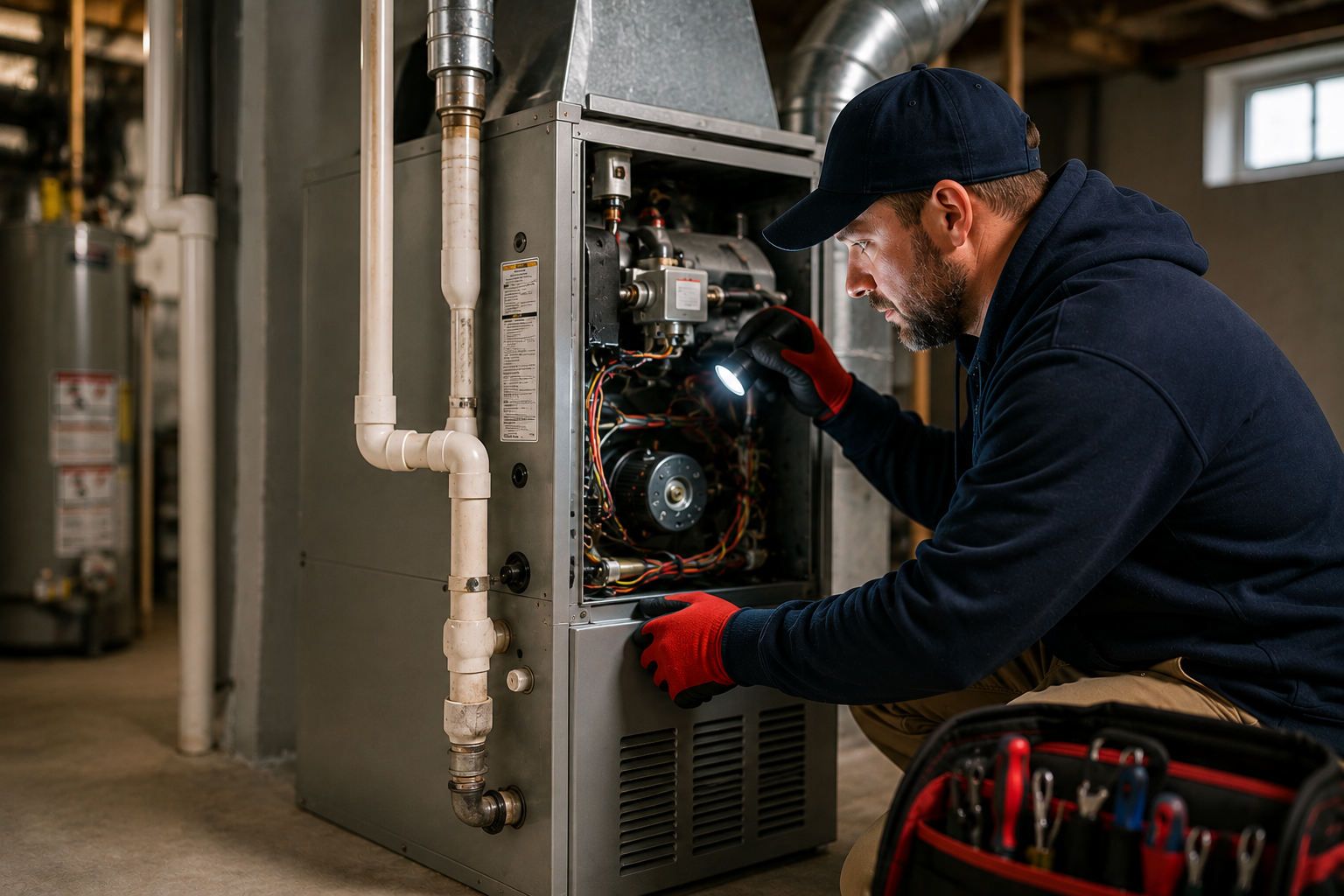
A furnace short cycles when it repeatedly starts and stops before completing a normal heating cycle. Common causes include a dirty air filter, blocked airflow, thermostat problems, overheating and limit-switch shutdowns, flame-sensing or ignition issues, blower problems, electrical or control failures, and an oversized furnace.

Start with safe checks such as the air filter, thermostat setting, and open supply and return vents. If the furnace continues shutting down every few minutes, schedule professional furnace repair rather than repeatedly resetting the equipment.

Fast Short-Cycling Diagnosis Guide

Filter dirty or airflow blocked?

Replace a heavily loaded filter and confirm registers and return-air openings are not obstructed. Restricted airflow can contribute to furnace overheating and shutdown.

Thermostat behaving strangely?

Incorrect readings, poor placement, wiring problems, or control issues can cause abnormal heating cycles. Check the basic settings before assuming the furnace itself has failed.

Still cycling every few minutes?

Repeated shutdowns can involve safety controls, ignition components, the blower, electrical controls, sizing, or another furnace problem that needs diagnosis.

Why Homeowners Call 1st Choice Heating & Cooling

  • Licensed and insured HVAC technicians
  • Furnace diagnostics focused on identifying the cause before recommending repairs
  • Heating repair, maintenance, replacement, and indoor comfort services
  • Serving Waukesha, Muskego, and nearby communities within the confirmed service area
  • Clear repair-versus-replacement guidance when equipment condition changes the decision

What Is Furnace Short Cycling?

A normal furnace operates in heating cycles. The thermostat calls for heat, the furnace starts, warm air is distributed through the home, and the system shuts down after the thermostat reaches its target.

Short cycling occurs when the furnace repeatedly starts and stops before completing an expected heating cycle. Homeowners may notice the furnace running for only a few minutes, shutting down, and then starting again soon afterward.

The exact length of a normal heating cycle varies with outdoor temperature, thermostat settings, furnace capacity, home construction, insulation, airflow, and heating demand. That is why there is no universal number of minutes that proves a furnace is short cycling.

The more useful warning sign is a clear change in behavior: the system repeatedly starts and stops, struggles to maintain temperature, or operates differently than it normally does.

Common Causes of Furnace Short Cycling

Possible cause What may be happening Typical next step
Dirty air filter Restricted airflow can allow heat to build up inside the furnace and contribute to an overheating shutdown. Inspect the filter and replace it if heavily loaded.
Blocked supply or return airflow Closed registers, blocked return-air openings, or other restrictions can reduce normal airflow through the system. Clear accessible airflow paths and have persistent restrictions evaluated.
Thermostat problem Incorrect readings, poor location, wiring issues, or control problems can result in improper heating calls. Confirm settings and have the thermostat or controls evaluated if cycling continues.
Overheating or limit-switch shutdown A furnace may shut down as part of its safety-control response when internal temperatures become too high. Professional diagnosis should identify why overheating is occurring.
Flame sensor or ignition issue Some furnaces may begin a heating sequence and then shut down when proper flame operation is not confirmed. Have ignition and flame-sensing components inspected by an HVAC technician.
Blower problem If the blower cannot move enough air, heat may not be distributed properly through the system. Inspect blower operation, controls, airflow, and related components.
Electrical or control problem Relays, boards, wiring, switches, and other controls can interrupt normal furnace operation. Professional electrical and furnace diagnostics are appropriate.
Oversized furnace A furnace with more capacity than the home needs may raise temperature quickly and operate in shorter cycles. Evaluate system sizing, heating load, ductwork, and replacement options when appropriate.

Can a Dirty Furnace Filter Cause Short Cycling?

Yes, a heavily clogged filter can contribute to short cycling on some systems by restricting airflow. When the furnace cannot move heat through the duct system effectively, internal temperatures may rise and a safety control may shut the heating cycle down.

The furnace may then cool, restart, and repeat the pattern.

That does not mean every short-cycling furnace simply needs a new filter. If replacing a visibly dirty filter does not restore normal operation, another airflow, control, mechanical, or equipment problem may be involved.

For preventive filter, airflow, and seasonal system care, review heating maintenance services.

Can a Thermostat Cause a Furnace to Turn On and Off?

Yes. The thermostat tells the heating system when the home needs heat, so inaccurate readings or control problems can affect furnace cycling.

Possible thermostat-related issues include:

  • Incorrect heating settings
  • Weak batteries on applicable thermostat models
  • Loose or damaged control wiring
  • A thermostat located near a draft, heat source, or other condition that affects its reading
  • Communication problems between the thermostat and HVAC system
  • A thermostat or control that is no longer operating properly

Before scheduling service, confirm the thermostat is set to Heat and that the temperature setting is above the current room temperature.

If the furnace continues starting and stopping abnormally, thermostat replacement should not be assumed until the entire heating sequence has been evaluated.

Why Does My Furnace Start and Then Shut Off?

When a furnace starts normally but shuts down shortly afterward, the timing of the failure can provide useful diagnostic information.

For example, shutdown shortly after ignition may point technicians toward ignition, flame verification, or safety-control conditions. Shutdown after the furnace has operated and become hot may point toward airflow, blower operation, overheating, or temperature-limit controls.

Because different failures can create similar homeowner symptoms, repeatedly restarting the furnace is less useful than identifying when in the heating sequence the shutdown occurs.

If possible, note:

  • How long the furnace runs before shutting off
  • Whether the burners ignite
  • Whether the blower begins operating
  • Whether warm air reaches the rooms
  • Whether the thermostat reaches its set temperature
  • Whether the furnace restarts on its own
  • Any new clicking, banging, buzzing, squealing, or other noises

That information can help a technician narrow the diagnosis.

Is Furnace Short Cycling Dangerous?

Short cycling itself does not identify one specific safety problem. However, repeated furnace shutdowns should not be ignored because some systems shut down in response to overheating, ignition problems, safety-control conditions, or other abnormal operation.

Short cycling can also contribute to:

  • Inconsistent indoor temperatures
  • More frequent furnace starts
  • Additional wear on some components
  • Reduced comfort during cold weather
  • Difficulty maintaining the thermostat setting
  • Potentially higher energy use when the system is operating inefficiently

If you smell gas, a carbon monoxide alarm activates, you see smoke, or you believe there is an immediate safety hazard, leave the affected area and contact the appropriate gas utility or emergency service. Do not remain inside attempting to diagnose the furnace.

What Can You Check Before Calling for Furnace Repair?

There are several basic checks homeowners can make without opening furnace panels or working on internal components.

  • Inspect the filter: Replace it if it is heavily clogged or overdue for replacement.
  • Check thermostat settings: Confirm the thermostat is set to Heat and calling for a higher temperature than the room.
  • Keep supply registers open: Avoid closing large numbers of vents in an attempt to redirect heat.
  • Clear return-air openings: Furniture, boxes, rugs, and other objects should not block return airflow.
  • Watch the cycling pattern: Note how long the furnace operates and what happens immediately before shutdown.
  • Listen for changes: New sounds can provide useful information about motors, ignition, controls, or mechanical operation.

If those checks do not resolve the problem, avoid repeatedly resetting the furnace or opening equipment panels to troubleshoot electrical, ignition, or combustion components.

Schedule furnace repair so the cause of the short cycling can be diagnosed.

Short Cycling: Maintenance, Repair, or Replacement?

Situation Path worth considering
Heavily clogged filter but furnace otherwise operates normally Replace the filter and consider heating maintenance if service is overdue.
Thermostat or minor control problem Professional diagnosis and repair may restore normal cycling.
Ignition, blower, electrical, or safety-control problem Schedule furnace repair to identify the failed component or underlying condition.
Furnace has repeated breakdowns and increasing repair needs Compare continued repair costs with heating replacement options.
Furnace appears significantly oversized for the home Have equipment capacity, heating load, airflow, and the overall installation evaluated before assuming another repair will solve the cycling behavior.

Which Next Step Fits the Problem?

Furnace works after a filter change?

Keep monitoring operation and schedule heating maintenance if preventive service is overdue.

Still shutting off every few minutes?

Schedule furnace repair so airflow, controls, ignition, safety components, and equipment operation can be evaluated.

Older system with repeated repairs?

Compare the current repair with heating installation and replacement before continuing to invest in unreliable equipment.

How Can You Reduce the Risk of Furnace Short Cycling?

Not every component failure can be prevented, and an oversized furnace cannot be corrected through maintenance alone. However, several habits can reduce avoidable airflow and maintenance-related problems.

  • Inspect and replace furnace filters as needed
  • Keep supply and return-air pathways unobstructed
  • Schedule preventive heating maintenance
  • Pay attention when normal furnace runtime changes
  • Address repeated shutdowns rather than continually resetting the equipment
  • Have recurring uneven-heating or airflow concerns evaluated
  • Use properly selected replacement equipment when the existing furnace reaches the end of its practical service life

If you want to understand what preventive service typically costs and includes, read our guide to furnace tune-up cost in Wisconsin.

What If Short Cycling Comes With Dust or Poor Airflow?

Short cycling and weak airflow can sometimes appear together, but that does not mean the ductwork is automatically dirty.

Airflow can be affected by filters, blower operation, duct restrictions, blocked registers, return-air pathways, system design, and other HVAC conditions.

If your concern also includes excessive dust, filtration, dry winter air, or other whole-home comfort problems, explore indoor air quality services. If visible duct debris or duct conditions are part of the concern, review air duct cleaning services.

The underlying condition should be identified before assuming one product or service will fix every symptom.

Frequently Asked Questions About Furnace Short Cycling

Why does my furnace turn on and off every few minutes?

A furnace that repeatedly turns on and off may be short cycling. Possible causes include a dirty filter, restricted airflow, thermostat problems, overheating, ignition or flame-sensing issues, blower problems, electrical controls, or an oversized furnace.

Can a dirty furnace filter cause short cycling?

Yes. A heavily clogged filter can restrict airflow and may contribute to furnace overheating and safety shutdowns. If replacing a dirty filter does not restore normal operation, another problem should be diagnosed.

How long should a furnace run before shutting off?

There is no universal normal runtime. Furnace cycles vary based on outdoor temperature, heating demand, thermostat settings, equipment capacity, insulation, airflow, and home construction. A repeated pattern of unusually short cycles or a clear change from normal operation is more useful than one specific number of minutes.

Can a thermostat cause furnace short cycling?

Yes. Incorrect thermostat readings, poor placement, control wiring, communication problems, or a failing thermostat can contribute to abnormal furnace cycling.

Can an oversized furnace short cycle?

Yes. A furnace with substantially more heating capacity than the home requires may satisfy the thermostat quickly and operate in shorter cycles. Proper evaluation should consider equipment capacity, heating load, ductwork, and airflow.

Is it bad to keep running a short-cycling furnace?

Repeated short cycling can reduce comfort and contribute to additional starts and component wear. Because short cycling can also be associated with overheating or other abnormal operation, recurring cycling should be diagnosed rather than ignored.

Can I fix furnace short cycling myself?

Homeowners can safely inspect the filter, confirm thermostat settings, and make sure supply and return-air openings are unobstructed. Internal electrical, ignition, control, combustion, and mechanical problems should be evaluated by a qualified HVAC technician.

Does short cycling mean I need a new furnace?

No. Many short-cycling problems are repairable. Replacement becomes more relevant when the system has significant condition problems, repeated breakdowns, improper sizing, a major failure, or repair costs that make continued investment difficult to justify.

Should I schedule a furnace tune-up or furnace repair for short cycling?

If the furnace is actively turning on and off abnormally, schedule furnace repair and diagnosis. A tune-up is better suited to preventive service when the furnace is generally operating normally.

Why does my furnace shut off before reaching the thermostat temperature?

Possible causes include airflow restrictions, overheating, thermostat problems, ignition or control issues, blower problems, or another furnace malfunction. If basic filter and thermostat checks do not resolve the problem, professional diagnosis is appropriate.

Furnace Still Turning On and Off?

Short cycling can come from airflow, thermostat, ignition, electrical, blower, safety-control, or equipment-sizing problems. 1st Choice Heating & Cooling can diagnose the cause and explain whether repair, maintenance, or replacement is the practical next step.
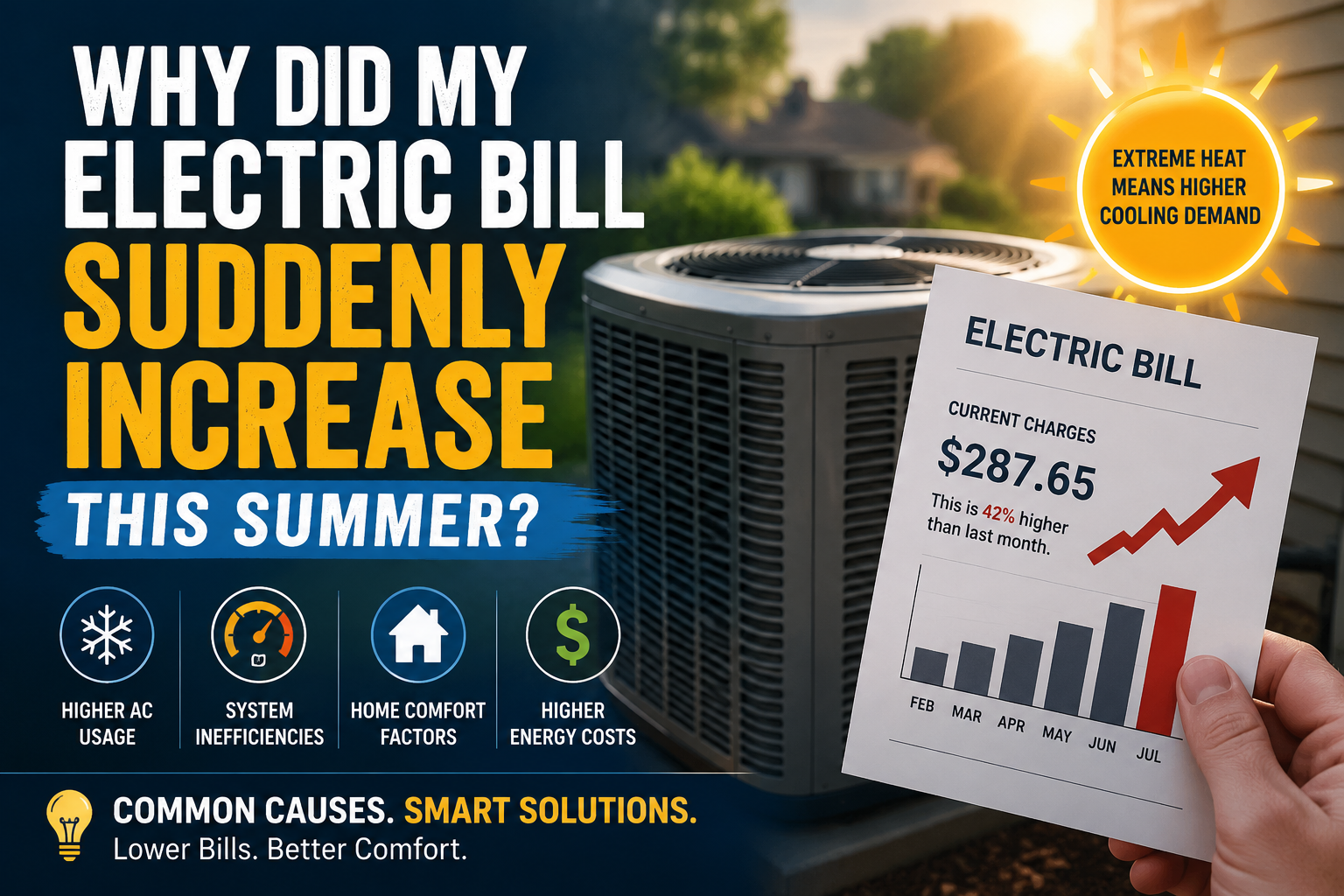
Why Did My Electric Bill Suddenly Increase This Summer?

Why electric bills rise in summer?

If your electric bill suddenly increased this summer, your air conditioner may be working harder than it should. While hot weather naturally increases cooling demand, a significant jump in energy costs often points to efficiency problems, maintenance issues, or aging HVAC equipment.

Quick Answer

A sudden increase in your electric bill is often caused by an air conditioner running longer than necessary due to dirty filters, low refrigerant, aging equipment, thermostat issues, poor insulation, or deferred maintenance. Identifying the cause early can help prevent higher operating costs and unnecessary system wear.

Fast Decision Guide

Bill Up Slightly?

Higher temperatures and increased AC usage may be responsible.

Bill Up Dramatically?

An HVAC efficiency issue may be causing excessive energy use.

Older AC System?

Aging equipment often becomes significantly less efficient over time.

Why Homeowners Call 1st Choice Heating & Cooling

  • Licensed and insured HVAC technicians
  • Residential cooling system specialists
  • Serving Waukesha and surrounding communities
  • Same-day service available in many cases
  • Honest recommendations focused on efficiency and comfort

Why Summer Electric Bills Often Spike

Your air conditioner is typically the largest energy consumer in your home during summer.

When outdoor temperatures rise, cooling systems naturally run longer. However, if your bill increases far beyond normal seasonal changes, the system may be operating inefficiently.

The challenge is determining whether the increase is weather-related or a sign that your HVAC system needs attention.

Common Reasons Your Electric Bill Increased

Dirty Air Filters

One of the simplest causes is also one of the most common.

A clogged filter restricts airflow, forcing the system to work harder.

  • Longer cooling cycles
  • Higher energy use
  • Reduced airflow
  • Increased system strain

Air Conditioner Running Constantly

If your system never seems to shut off, it may be struggling to maintain indoor temperatures.

You may also want to read:
Why Is My AC Running Constantly But Not Cooling My House?

Low Refrigerant Levels

When refrigerant levels are low, cooling efficiency drops and the system runs longer to achieve the same results.

Dirty Condenser Coils

The outdoor unit must release heat effectively.

When condenser coils become dirty, cooling performance declines and energy consumption increases.

Aging Equipment

Older systems often consume significantly more electricity than newer, high-efficiency equipment.

If your system is approaching the end of its expected lifespan, you may benefit from reviewing:
How Long Do Air Conditioners Last in Wisconsin?

How HVAC Problems Affect Utility Costs

Issue Potential Energy Impact
Dirty Air Filter Higher run times and reduced airflow
Low Refrigerant Significant efficiency loss
Dirty Coils Poor heat transfer
Aging Equipment Higher monthly operating costs
Thermostat Problems Unnecessary cooling cycles

Things You Can Check First

  1. Replace the air filter
  2. Verify thermostat settings
  3. Inspect outdoor equipment for debris
  4. Check for blocked supply vents
  5. Compare usage to previous summers
  6. Schedule maintenance if overdue

Can You Wait or Should You Schedule Service?

Usually OK To Monitor

Minor bill increase during unusually hot weather.

Schedule Service Soon

Noticeably higher bills combined with reduced cooling performance.

Call Immediately

Warm air, frozen coils, unusual noises, or significant cooling loss.

What We Commonly See During Wisconsin Summers

Many homeowners first notice HVAC issues when utility bills arrive.

Systems that appear to be cooling normally may actually be running significantly longer than necessary due to dirty filters, deferred maintenance, refrigerant issues, or age-related efficiency decline.

Can Maintenance Lower Energy Bills?

In many cases, yes.

Routine maintenance helps identify issues before they become larger efficiency problems.

Benefits often include:

  • Improved airflow
  • Cleaner coils
  • Better system performance
  • Reduced equipment strain
  • Lower operating costs

When High Energy Bills May Point Toward Replacement

If your system is older and utility costs continue increasing every year, replacement may be worth evaluating.

Common indicators include:

  • System is 15+ years old
  • Frequent repair visits
  • Cooling performance decline
  • Consistently rising energy costs
  • Major component wear

High Electric Bill FAQs

Can my air conditioner cause my electric bill to increase?

Yes. Cooling systems are often the largest contributor to summer energy usage.

Will changing my air filter reduce energy costs?

A clean filter can improve airflow and help the system operate more efficiently.

Can low refrigerant increase energy bills?

Yes. The system often runs longer and works harder when refrigerant levels are low.

Why is my AC running all day?

Restricted airflow, refrigerant issues, dirty coils, or aging equipment may be responsible.

How often should AC maintenance be performed?

Most homeowners benefit from annual professional maintenance.

When should I replace an older AC system?

If repairs become frequent and operating costs continue rising, replacement may provide better long-term value.

Concerned About Rising Cooling Costs?

If your electric bill has increased unexpectedly and your air conditioner seems to be working harder than normal, the simplest next step is scheduling a professional inspection to identify the cause.

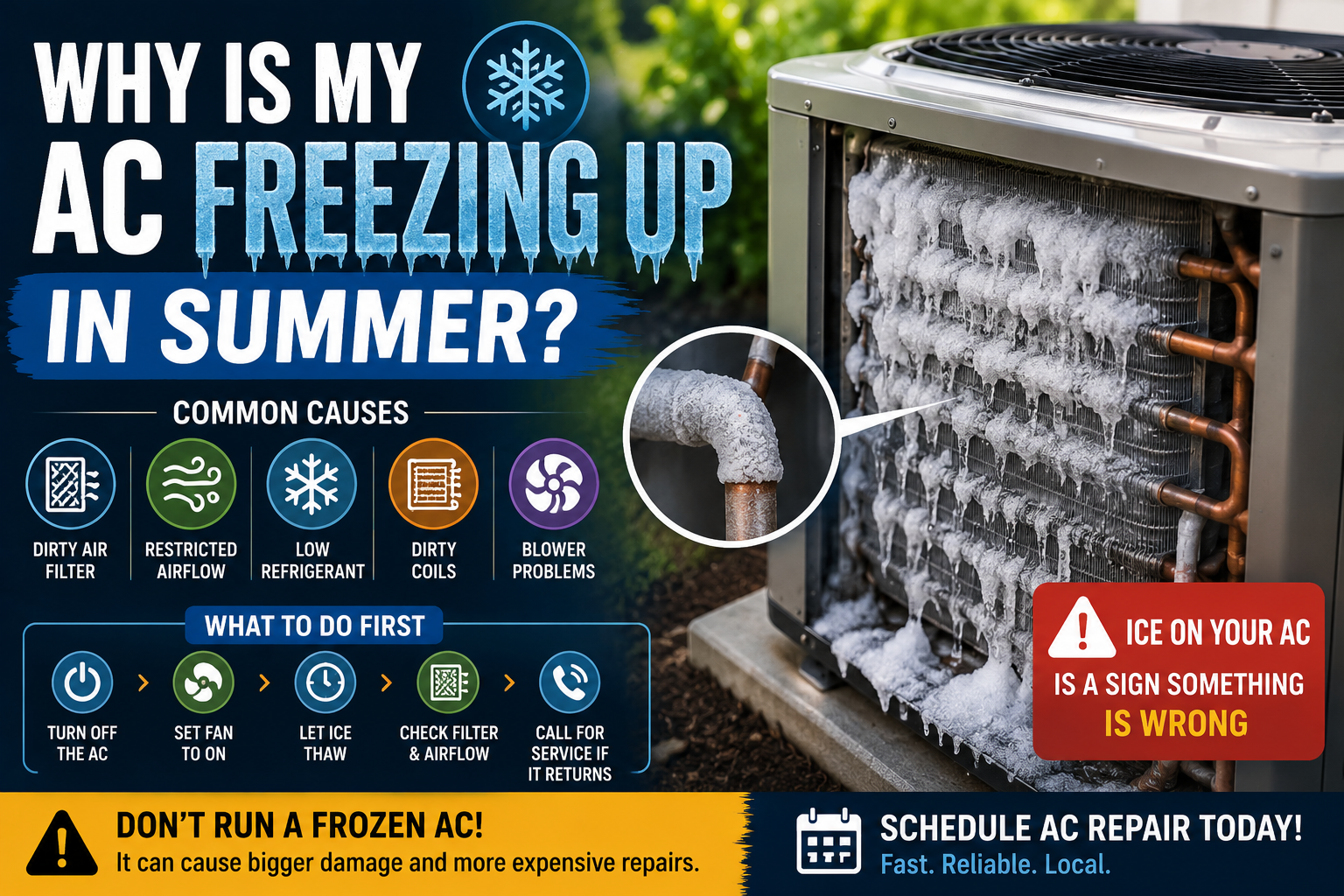
Why Is My AC Freezing Up in Summer?

Why is my AC freezing up?

If you notice ice forming on your air conditioner during summer, your system is telling you something is wrong. While a frozen AC may still run for a short period, continuing to operate it can lead to larger repairs and extended cooling loss.

Quick Answer

An air conditioner freezes up when airflow becomes restricted or the refrigerant system cannot absorb heat properly. Common causes include dirty air filters, blocked vents, refrigerant leaks, dirty coils, or blower motor problems. Turning the system off and scheduling professional diagnosis is often the safest next step.

Fast Decision Guide

Ice On Refrigerant Lines?

Restricted airflow or low refrigerant are often responsible.

Ice On Indoor Coil?

The system may not be moving enough air across the evaporator coil.

System Still Running?

Continuing to run a frozen AC can make the problem worse.

Why Homeowners Call 1st Choice Heating & Cooling

  • Licensed and insured HVAC technicians
  • Same-day AC repair available in many cases
  • Serving Waukesha and surrounding communities
  • Residential cooling system specialists
  • Emergency HVAC service available

Why Ice Forms on an Air Conditioner

Many homeowners assume ice means their air conditioner is working harder than normal.

The opposite is usually true.

When an AC freezes, the system is often struggling to move heat properly. As temperatures inside the coil drop too low, moisture freezes and ice begins to form.

The longer the issue continues, the more cooling performance suffers.

Most Common Reasons an AC Freezes Up

Dirty Air Filter

Restricted airflow is one of the most common causes of a frozen air conditioner.

  • Reduced airflow across the coil
  • Lower coil temperatures
  • Ice formation
  • Reduced cooling performance

Blocked Supply or Return Vents

Closed or blocked vents can disrupt airflow throughout the home and contribute to freezing problems.

Low Refrigerant Levels

A refrigerant leak changes system pressures and can cause temperatures inside the coil to drop below freezing.

Common signs include:

  • Ice buildup
  • Warm air from vents
  • Long run times
  • Poor cooling performance

Dirty Evaporator Coil

A dirty indoor coil reduces heat transfer and can contribute to freezing conditions.

Blower Motor Problems

If the blower cannot move enough air across the coil, ice formation becomes more likely.

What To Do If Your AC Is Frozen

  1. Turn the thermostat off
  2. Switch the fan to “On”
  3. Replace the air filter if dirty
  4. Check that vents are open
  5. Allow ice to thaw completely
  6. Schedule service if the problem returns

Can You Wait or Should You Call Today?

Usually OK To Monitor

Dirty filter discovered and airflow restored.

Schedule Service Soon

Ice returns after thawing or cooling remains weak.

Call Immediately

Warm air, refrigerant concerns, electrical issues, or complete cooling loss.

What This Problem Could Cost If Ignored

Problem Potential Outcome
Dirty Filter Reduced efficiency and higher bills
Refrigerant Leak Compressor damage
Frozen Coil Extended cooling loss
System Overworking Premature equipment failure

What We Commonly See During Wisconsin Summers

In southeastern Wisconsin, frozen air conditioners often appear during the first extended heat wave of the season.

Systems that have dirty filters, low refrigerant, or deferred maintenance may operate normally during mild weather but struggle when temperatures rise and cooling demand increases.

If your AC continues freezing up after changing the filter and restoring airflow, professional diagnosis can help prevent larger cooling system repairs.


Explore AC Repair Services

When Replacement May Be Worth Discussing

Sometimes freezing issues are a symptom of larger system problems.

Replacement may be worth evaluating when:

  • The system is over 15 years old
  • Major repairs are needed
  • Cooling performance continues declining
  • Repair costs keep increasing
  • Efficiency has dropped significantly

AC Repair Service Areas

1st Choice Heating & Cooling provides cooling services throughout:

Waukesha
Muskego
New Berlin
West Allis
Franklin
Oak Creek
Pewaukee
Greenfield

Frozen AC FAQs

Should I turn my AC off if it’s frozen?

Yes. Turning the system off allows ice to thaw and helps prevent additional strain on components.

Can a dirty air filter cause my AC to freeze?

Yes. Restricted airflow is one of the most common causes of freezing.

Why is there ice on my refrigerant line?

Low refrigerant, airflow restrictions, or coil issues may be responsible.

Will the ice go away on its own?

The ice may melt, but the underlying problem often remains.

Can low refrigerant cause freezing?

Yes. Refrigerant leaks are a common cause of frozen coils.

Can I keep running a frozen air conditioner?

Continuing to operate a frozen system can worsen the problem and increase repair costs.

When should I call for AC repair?

If freezing returns after replacing the filter and thawing the system, professional service is recommended.

Schedule AC Repair in Waukesha, WI

If your air conditioner is freezing up, blowing warm air, or struggling to cool your home, the simplest next step is scheduling a professional inspection before the problem gets worse.

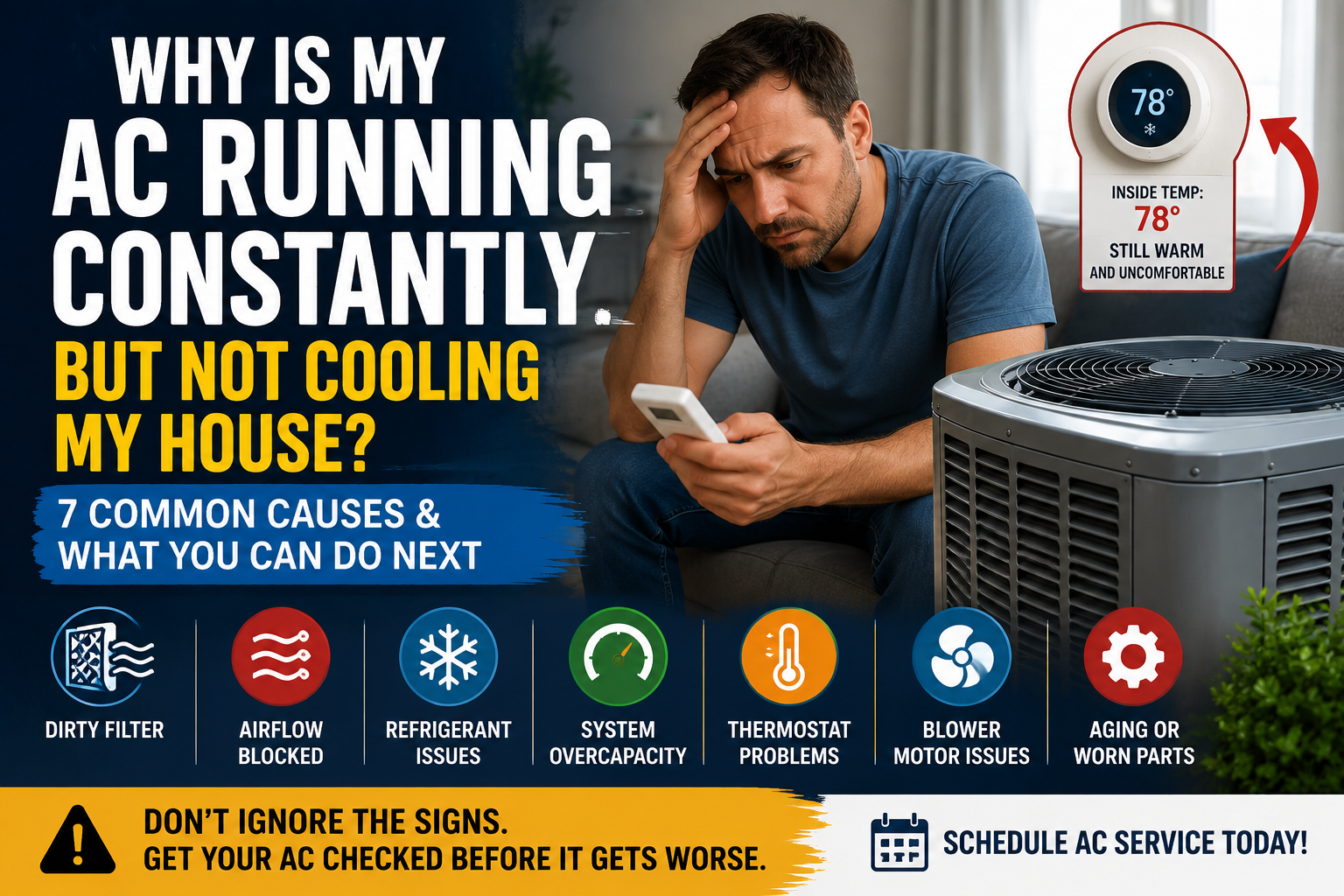
Why Is My AC Running Constantly But Not Cooling My House?

Why is my AC running constantly?

If your air conditioner is running constantly but your home still feels warm, the issue could be anything from a clogged filter to low refrigerant or a failing compressor. While some causes are simple to address, others can quickly lead to expensive repairs if ignored.

Quick Answer

An AC that runs constantly without cooling properly is usually dealing with restricted airflow, low refrigerant, dirty coils, thermostat issues, or an aging system struggling to keep up with demand. If basic maintenance doesn’t solve the issue, professional diagnosis is recommended.

Fast Decision Guide

Running Non-Stop?

If your AC runs for hours without reaching the thermostat setting, efficiency problems or cooling system issues may be present.

Air Feels Warm?

Warm air from vents often points to refrigerant problems, dirty coils, or compressor issues.

Energy Bills Rising?

An overworked air conditioner can significantly increase monthly utility costs.

Why Homeowners Call 1st Choice Heating & Cooling

  • Licensed and insured HVAC technicians
  • Same-day AC repair available in many cases
  • Serving Waukesha and surrounding Milwaukee-area communities
  • Residential cooling system specialists
  • Emergency HVAC service available

Why an AC May Run Constantly Without Cooling

Your air conditioner is designed to cycle on and off throughout the day. During hot Wisconsin summers, longer run times are normal, but your system should still reach the temperature set on your thermostat.

If it runs continuously and never catches up, something is preventing the system from cooling efficiently.

Common Reasons Your AC Won’t Stop Running

Dirty Air Filter

A clogged filter restricts airflow and makes it difficult for your system to circulate cooled air.

  • Reduced airflow
  • Longer run times
  • Higher energy bills
  • Potential evaporator coil freezing

Low Refrigerant Levels

Refrigerant allows your AC to absorb heat from inside your home. If levels are low due to a leak, cooling performance drops significantly.

  • Warm air from vents
  • Ice on refrigerant lines
  • Extended run cycles
  • Poor temperature control

Dirty Condenser Coils

Outdoor condenser coils release heat collected from your home. When covered in dirt or debris, cooling efficiency drops.

Thermostat Problems

Sometimes the issue is not the air conditioner itself.

  • Incorrect thermostat settings
  • Faulty temperature readings
  • Sensor problems
  • Programming issues

Aging Equipment

Older systems often lose efficiency and struggle during extended periods of hot weather.

If your system is more than 10–15 years old, it may be time to consider whether repair or replacement makes more financial sense.

What This Problem Could Cost If Ignored

Issue Potential Result
Dirty Filter Higher utility bills and airflow restrictions
Low Refrigerant Compressor damage and expensive repairs
Dirty Coils Reduced cooling capacity and longer run times
System Overworking Premature equipment failure

Quick Things You Can Check Before Calling for Service

  1. Replace the air filter if dirty
  2. Verify thermostat settings
  3. Check that supply vents are open
  4. Inspect the outdoor unit for debris
  5. Listen for unusual sounds
  6. Confirm the breaker has not tripped

Can You Wait or Should You Call Today?

Usually OK To Monitor

Dirty filter, mild airflow reduction, minor thermostat adjustments.

Schedule Service Soon

System running all day, uneven cooling, rising electric bills.

Call Immediately

Warm air, frozen coils, burning smells, electrical concerns.

What We See Most Often During Wisconsin Summers

In climates like southeastern Wisconsin, prolonged summer heat often exposes cooling issues that went unnoticed during spring. The most common problems include dirty filters, frozen evaporator coils, refrigerant leaks, and aging systems struggling to maintain indoor temperatures.

If your system is running constantly but your home still isn’t comfortable, professional diagnosis can often identify the problem before it becomes a larger repair.


Explore AC Repair Services

When AC Replacement May Be Worth Considering

If repairs are becoming more frequent, replacement may provide better long-term value.

  • System is 10–15+ years old
  • Frequent repair history
  • Cooling performance continues declining
  • High summer utility bills
  • Major component failure

AC Running Constantly FAQs

Is it normal for my AC to run all day?

Longer run times are normal during extreme heat, but the system should still reach the thermostat setting.

Can a dirty air filter cause my AC to run constantly?

Yes. Restricted airflow can significantly reduce cooling performance.

Why is my AC running but not cooling?

Common causes include low refrigerant, dirty coils, airflow restrictions, thermostat issues, or compressor problems.

Will running constantly damage my AC?

Extended operation increases wear on components and can shorten equipment life.

Should I repair or replace my AC?

That depends on the system age, repair costs, and overall condition of the equipment.

Can low refrigerant fix itself?

No. Refrigerant loss usually indicates a leak that requires professional repair.

Schedule AC Repair in Waukesha, WI

If your air conditioner is running constantly but still not keeping your home comfortable, the simplest next step is scheduling a professional inspection to identify the underlying issue.

Furnace Not Working? Common Causes and What To Check First in Waukesha, WI

If your furnace stops working during winter, the issue may be something simple like a dirty air filter or thermostat setting, or it could point to a larger heating system problem that requires professional repair.

Quick Answer

If your furnace is not working, common causes include dirty air filters, thermostat problems, ignition failure, airflow restrictions, or blower motor issues. Some problems are simple to identify, while others require professional diagnosis to safely restore heat.

Fast Decision Guide

Furnace Completely Stopped?

Start by checking the thermostat, circuit breaker, and air filter before assuming a major furnace failure.

Blowing Cold Air?

Ignition problems, airflow restrictions, or thermostat issues are some of the most common causes.

Hearing Loud Noises?

Grinding, banging, or squealing noises may indicate blower motor or mechanical issues that should be inspected quickly.

Why Homeowners Call 1st Choice Heating & Cooling

  • Licensed and insured HVAC technicians
  • Same-day furnace repair available in many cases
  • Serving Waukesha and surrounding Milwaukee-area communities
  • Residential heating repair expertise
  • Emergency heating service during winter weather

Why Furnaces Stop Working

Furnaces often show warning signs before complete breakdowns happen. In colder Wisconsin winters, heating systems run heavily for long stretches, increasing wear on filters, motors, ignition systems, and airflow components.

The key is determining whether the issue is something minor or a sign of a larger repair problem.

Common Reasons Your Furnace Isn’t Working

Dirty Air Filter

A clogged air filter is one of the most common furnace problems homeowners experience.

  • Weak airflow from vents
  • Overheating
  • Furnace shutdowns
  • Reduced heating performance
  • Higher energy bills

Thermostat Problems

Incorrect thermostat settings or thermostat malfunctions can prevent the furnace from operating properly.

  • Thermostat not set to “Heat”
  • Dead batteries
  • Incorrect temperature settings
  • Screen not responding

Pilot Light or Ignition Failure

If the ignition system fails, the furnace may not produce heat at all.

  • Dirty ignition components
  • Gas supply interruptions
  • Flame sensor problems
  • Ignition control failure

Blower Motor Problems

The blower motor pushes warm air through the ductwork. If it fails, homeowners may experience weak airflow, loud noises, or intermittent heating.

Tripped Circuit Breakers

Sometimes the furnace will not turn on because of a tripped breaker or electrical interruption.

Quick Things You Can Check Before Calling for Service

  1. Verify the thermostat is set to “Heat”
  2. Replace the air filter if dirty
  3. Check the circuit breaker
  4. Make sure vents are open and unobstructed
  5. Listen for unusual noises
  6. Check if the furnace is attempting to start

If the furnace still does not heat properly after these steps, professional inspection is usually recommended.

Signs You Should Call for Furnace Repair

No Heat

Complete heating loss during winter should be addressed quickly.

Cold Air From Vents

This may indicate ignition failure, airflow restrictions, or overheating shutdowns.

Burning Smells

Persistent smells may indicate electrical or mechanical issues.

Loud Noises

Banging, squealing, or grinding sounds often point to mechanical wear.

Problems Homeowners Should Not Attempt To Repair

Problem Why Professional Service Is Needed
Ignition Failure Gas and electrical diagnostics are required
Blower Motor Repair Mechanical and electrical testing is needed
Heat Exchanger Issues Potential combustion safety concern
Electrical Failures High-voltage components require trained repair
Gas Valve Problems Licensed HVAC diagnosis is recommended

If your furnace still is not heating properly after basic troubleshooting, scheduling service early can help prevent larger repairs.


Explore Furnace Repair Services

What Professional Furnace Repair Typically Includes

1Inspect thermostat and controls

2Check ignition and safety systems

3Test airflow and blower operation

4Inspect filters and duct airflow

5Diagnose electrical or mechanical problems

6Verify safe operation after repair

When Furnace Replacement May Be Worth Considering

Sometimes repeated repair issues point toward larger system wear or declining efficiency.

  • Furnace is 15–20+ years old
  • Repairs are becoming frequent
  • Heating performance is declining
  • Energy bills continue rising
  • Major components are failing

Furnace Repair Service Areas

1st Choice Heating & Cooling provides furnace repair services throughout:

Waukesha
Muskego
New Berlin
West Allis
Franklin
Oak Creek
Pewaukee
Greenfield

Furnace Repair FAQs

Why is my furnace running but not heating?

This can be caused by airflow restrictions, thermostat problems, ignition failure, or blower motor issues.

Can a dirty air filter stop a furnace from working?

Yes. Restricted airflow can cause overheating and furnace shutdowns.

Why is my furnace blowing cold air?

Possible causes include thermostat settings, ignition problems, airflow issues, or overheating shutdowns.

What should I check before calling for repair?

Check the thermostat, air filter, circuit breaker, and airflow around vents first.

Why does my furnace keep shutting off?

Short cycling can result from overheating, airflow restrictions, thermostat issues, or ignition problems.

When should I replace my furnace instead of repairing it?

Replacement may make sense if the furnace is older, inefficient, or requires frequent repairs.

Can delaying furnace repair increase costs?

Yes. Continuing to operate a damaged system can worsen mechanical problems over time.

Schedule Furnace Repair in Waukesha, WI

If your furnace is not turning on, is blowing cold air, or is making unusual noises, the next step is to schedule a professional inspection before the issue worsens.

AC Not Cooling? Here’s What To Check Before Calling for Repair in Waukesha, W

If your AC is blowing warm air or struggling to cool the home, there are a few things you can safely check before scheduling service. Some issues are simple airflow or thermostat problems, while others require professional AC repair.

Quick Answer

If your AC is not cooling properly, common causes include thermostat issues, clogged air filters, blocked outdoor airflow, or electrical problems. If basic troubleshooting does not restore cooling, the issue may involve refrigerant levels, airflow restrictions, or compressor problems that require professional repair.

Fast Decision Guide

AC Running But Blowing Warm Air?

Start with the thermostat, air filter, and outdoor unit airflow before assuming a major repair is needed.

System Won’t Turn On?

Check the circuit breaker and thermostat settings first. Electrical issues may require professional diagnosis.

Cooling Keeps Getting Worse?

Delaying repairs can increase strain on the system and lead to more expensive damage during peak summer temperatures.

Why Homeowners Call 1st Choice Heating & Cooling

  • Licensed and insured HVAC technicians
  • Same-day AC repair available in many cases
  • Serving Waukesha and surrounding Milwaukee-area communities
  • Residential cooling repair expertise
  • Emergency repair support during summer heat

What To Check Before Calling for AC Repair

1. Check Your Thermostat

Make sure the thermostat is set to “Cool” and the temperature is lower than the current indoor temperature.

2. Replace the Air Filter

Dirty filters can restrict airflow and reduce cooling performance. Replace the filter if it looks clogged or dusty.

3. Inspect the Outdoor Unit

Clear away leaves, grass, and debris around the condenser unit to improve airflow and cooling efficiency.

4. Check the Circuit Breaker

If the system will not turn on at all, check for a tripped breaker or electrical interruption.

When It’s Time To Call a Professional

Some cooling issues require specialized tools, electrical testing, or refrigerant handling.

  • Warm air coming from vents
  • Ice buildup on refrigerant lines
  • Buzzing or grinding noises
  • Water leaking around the system
  • Repeated breaker trips
  • Weak airflow throughout the home

If your AC is still not cooling after basic troubleshooting, scheduling service early can help prevent larger repairs.


Explore AC Repair Services

AC Repair Service Areas

1st Choice Heating & Cooling provides AC repair services throughout:

Waukesha
Muskego
New Berlin
West Allis
Franklin
Oak Creek
Pewaukee
Greenfield

Frequently Asked Questions

Why is my AC running but not cooling?

This may be caused by restricted airflow, thermostat issues, refrigerant problems, or compressor failure.

Can a dirty air filter stop my AC from cooling?

Yes. Dirty filters can restrict airflow and significantly reduce cooling performance.

Why does my AC keep tripping the breaker?

Repeated breaker trips often signal electrical or compressor-related problems that require professional inspection.

When should I call for AC repair?

If the system continues blowing warm air after basic troubleshooting or shows signs of electrical or refrigerant issues.

Schedule AC Repair in Waukesha, WI

If your AC is still not cooling properly, the simplest next step is scheduling a professional diagnosis before the issue worsens.

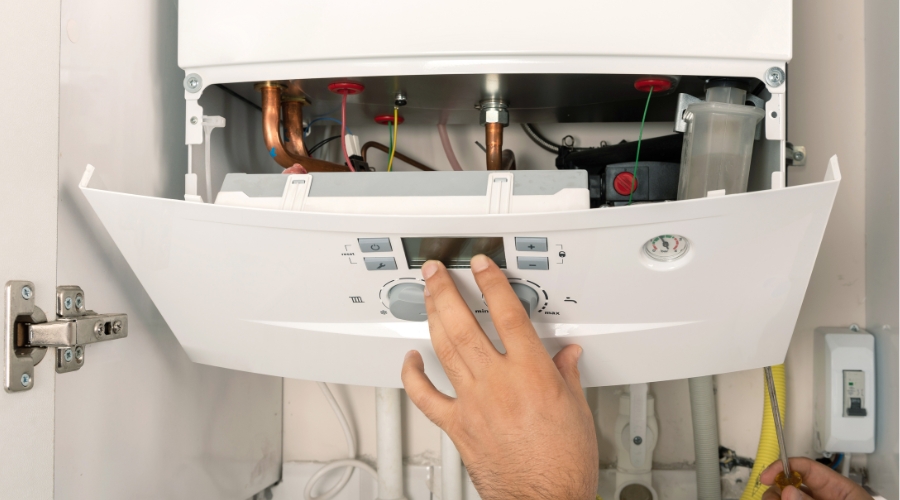
Boiler Not Working? Causes and When to Call for Repair in Waukesha, WI

boiler

Quick Answer

If your boiler is not working, common causes include low pressure, thermostat issues, ignition failure, frozen condensate pipes, or circulation problems. Some issues are minor, while others require immediate repair to prevent heat loss or system damage. In colder climates like Waukesha and the surrounding Milwaukee area, boiler problems should be addressed quickly during winter months to avoid complete heating failure.


Fast Decision Guide

If you have no heat at all

A full system shutdown, especially during freezing temperatures, should be inspected as soon as possible.

If you’re comparing repair vs. replacement

Age, repair frequency, and efficiency usually determine whether repair or replacement makes more financial sense.

If you’re worried about safety

Leaks, unusual smells, banging noises, or pressure issues should never be ignored.


Local Trust Snapshot

  • Serving homeowners throughout Waukesha, Muskego, and surrounding areas
  • Licensed and insured HVAC technicians
  • Same-day service available for many heating issues
  • Emergency heating repair support during winter weather
  • Residential boiler and furnace repair expertise

Common Reasons a Boiler Stops Working

Boiler systems can stop working for several different reasons. Some are simple fixes, while others involve mechanical or circulation problems that require professional repair.

Low Boiler Pressure

Low pressure is one of the most common causes of boiler problems.

Signs may include:

  • No heat
  • Cold radiators
  • Error codes
  • Inconsistent heating

Pressure loss can happen because of leaks, bleeding radiators, or failing internal components.


Thermostat Problems

If the thermostat is not communicating properly with the boiler, the system may not turn on or maintain the correct temperature.

This can include:

  • Dead batteries
  • Wiring problems
  • Incorrect settings
  • Sensor failure

Ignition or Pilot Light Failure

Modern boilers rely on ignition systems to start heating cycles. If the ignition fails or the pilot light goes out, the boiler may stop producing heat entirely.

Possible causes include:

  • Dirty ignition components
  • Gas supply interruptions
  • Faulty thermocouples
  • Electrical failure

Frozen Condensate Pipe

In colder Wisconsin weather, condensate pipes can freeze and block drainage from the boiler system.

When this happens, many boilers automatically shut down as a safety precaution.

This issue becomes more common during extended cold snaps across the Milwaukee metropolitan area.


Circulator Pump Problems

The circulator pump moves heated water throughout the system. If it fails, you may notice:

  • Uneven heating
  • Loud noises
  • Hot and cold spots
  • Reduced system performance

Pump issues can worsen quickly if ignored.


When You Should Call a Professional

Some boiler problems should be inspected immediately to prevent system damage or complete heating loss.

Call for boiler repair if you notice:

  • No heat or hot water
  • Water leaking near the boiler
  • Loud banging or clanking noises
  • Constant pressure drops
  • Boiler repeatedly shutting off
  • Uneven heating throughout the home
  • Sudden increases in heating costs

If the system shuts down completely during freezing temperatures, emergency repair may be necessary.


What Boiler Repair Typically Includes

Professional boiler repair usually involves a full diagnostic inspection to identify the source of the problem.

Typical repair process

  1. Inspect boiler controls and thermostat
  2. Check pressure levels and circulation
  3. Test ignition and gas supply systems
  4. Inspect pumps, valves, and heat exchangers
  5. Identify leaks or damaged components
  6. Perform repairs and verify safe operation

The exact repair depends on the age, condition, and type of boiler system installed in the home.


Cost Factors for Boiler Repair in Waukesha

Boiler repair costs vary depending on the issue and the parts involved.

Factors that commonly affect cost include:

Factor Impact on Repair
Boiler age Older systems may require harder-to-find parts
Type of failure Ignition and circulation issues vary in complexity
Emergency timing After-hours service may affect pricing
System condition Deferred maintenance can increase repair scope

The most expensive repairs are often the result of small issues that were ignored for too long.


Common Boiler Mistakes Homeowners Make

Ignoring warning signs

Small noises or pressure changes can become larger mechanical failures.

Delaying maintenance

Routine inspections help identify worn components before winter demand increases.

Resetting the system repeatedly

Repeated resets without diagnosing the issue can sometimes worsen underlying problems.

Waiting until total failure

Calling earlier usually reduces both repair complexity and downtime.


How To Choose the Right Boiler Repair Company in Waukesha

When comparing heating companies, look for:

  • Licensed and insured technicians
  • Experience with boiler systems
  • Emergency repair availability
  • Strong local reviews
  • Clear communication and diagnosis
  • Maintenance support after repairs

Boiler systems require different expertise than standard forced-air furnaces, so experience matters.


Boiler Repair Service Areas

1st Choice Heating & Cooling provides heating and boiler repair services throughout:

  • Waukesha
  • Muskego
  • New Berlin
  • West Allis
  • Franklin
  • Nearby Milwaukee-area communities

FAQ

Why is my boiler running but not heating?

This can be caused by low pressure, circulation problems, thermostat issues, or air trapped in the system.

Can a frozen pipe stop a boiler from working?

Yes. Frozen condensate pipes can trigger a boiler safety shutdown during cold weather.

How long do boilers usually last?

Many residential boilers last 15–20 years with proper maintenance.

Is it safe to keep resetting my boiler?

Repeatedly resetting a boiler without diagnosing the issue is not recommended.

Why is my boiler making loud noises?

Banging or clanking noises may indicate pressure problems, trapped air, or circulation issues.

Should I repair or replace my boiler?

This depends on the system age, repair frequency, efficiency, and overall condition.

How often should a boiler be serviced?

Most systems should be professionally serviced once per year.

Can low pressure damage a boiler?

Low pressure can reduce performance and contribute to system strain if ignored.

What causes uneven heating in a home?

Circulation problems, trapped air, thermostat issues, or failing pumps can all contribute.

Do boiler repairs require emergency service?

Some do, especially during freezing temperatures or complete system shutdowns.


Boiler Repair in Waukesha & Milwaukee

Boiler problems rarely improve on their own. Addressing issues early can help prevent larger repairs, heating loss, and winter emergencies.

If you’re dealing with boiler or heating issues, explore Heating Repair Services or learn more about Heating Maintenance Services available throughout the Waukesha and Milwaukee area.

You can also view all Heating Services offered by 1st Choice Heating & Cooling.

Schedule Boiler Repair

If your boiler is not heating properly, the simplest next step is scheduling a professional inspection before the issue worsens.

Contact 1st Choice Heating & Cooling for boiler repair service in Waukesha and surrounding communities.