
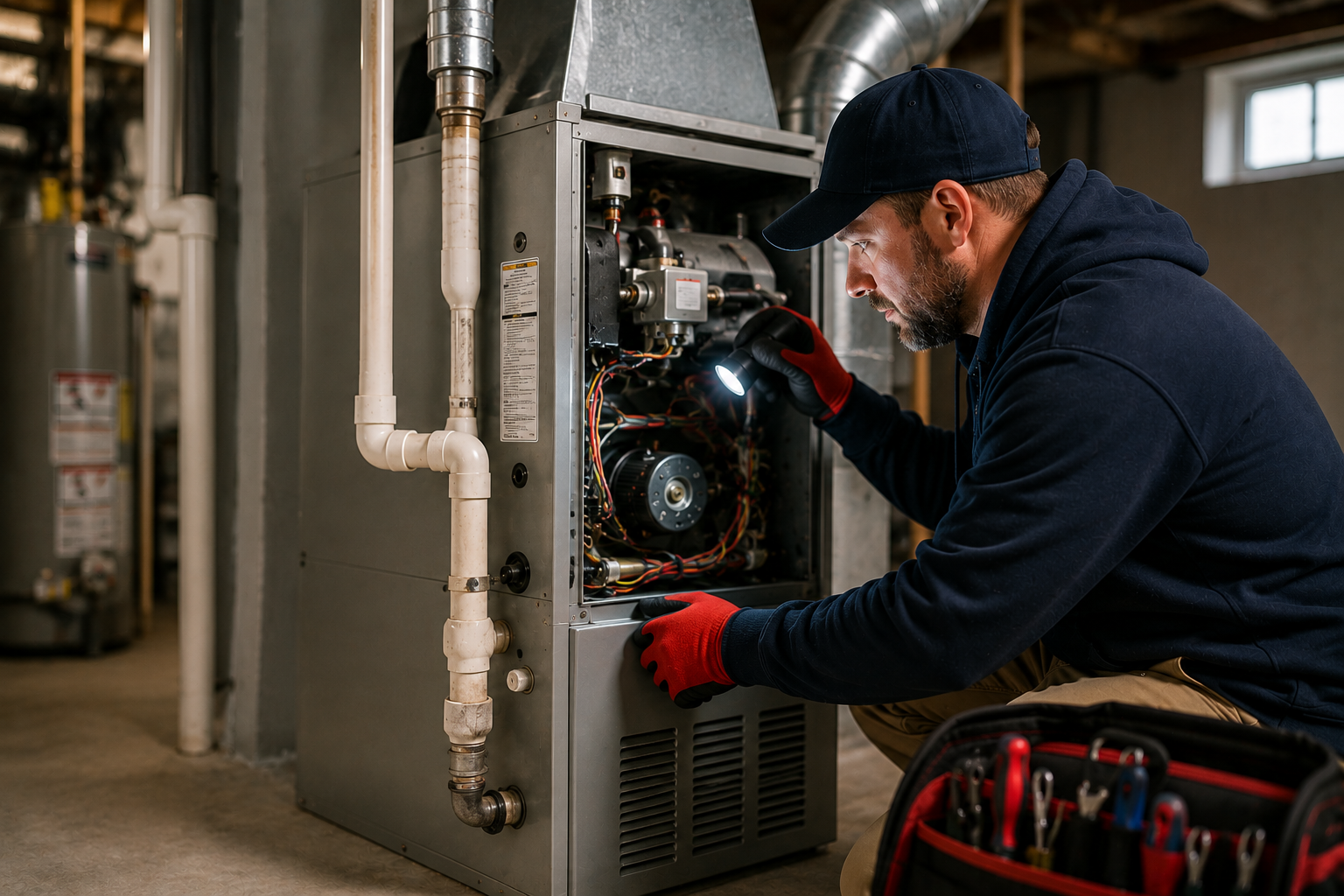
Wisconsin Furnace Troubleshooting Guide
Furnace Not Working? Safe Checks Before Calling for Repair
When a furnace stops heating during a Wisconsin winter, the first question is whether the cause is a simple setting or an equipment problem that needs diagnosis. A few safe checks can rule out common issues, but homeowners should stop before opening panels or working around gas, ignition, or electrical components.
Start With the Condition, Not a Guess
If the furnace is not working, confirm the thermostat is set to Heat, check the filter, verify the furnace switch and circuit breaker, and make sure supply and return openings are not blocked. If the system still will not heat—or if there is a gas odor, smoke, or a carbon-monoxide alarm—stop troubleshooting and follow the safety guidance below.
Find the Right Starting Point
Nothing happens
Check the thermostat, furnace switch and circuit breaker. A technician may need to diagnose controls, safeties or power inside the equipment.
The blower runs but air is cool
The cause may involve thermostat settings, ignition, burners, overheating, controls or another furnace condition.
The furnace starts and stops
Restricted airflow, overheating, thermostat conditions, controls or sizing can contribute to short cycling.
Airflow feels weak
Start with the filter and open registers. Persistent weak airflow may involve the blower, ductwork or another restriction.
Five Safe Checks to Make First
- Confirm the thermostat mode. Set it to Heat and choose a temperature above the current room temperature.
- Look at the thermostat display. Replace batteries when the model uses them and the screen is blank or unreliable.
- Check the furnace filter. Replace a heavily loaded filter with the correct size and orientation.
- Check power from outside the cabinet. Confirm the nearby furnace switch has not been turned off and check the labeled breaker once.
- Open the airflow path. Make sure supply registers and return-air openings are not covered by furniture, rugs or boxes.
If these checks do not restore normal operation, repeated resets are unlikely to solve the underlying problem.
When to Stop Troubleshooting
Leave the affected area and contact emergency services or the gas utility from a safe location if you smell gas, a carbon-monoxide alarm activates, or you see smoke or an immediate fire hazard. Do not remain inside trying to locate the source.
For a non-life-safety failure during dangerous cold, use the Emergency HVAC Service path. Avoid removing furnace panels, bypassing safety switches, repeatedly relighting equipment, or testing live electrical components.
Why a Furnace Can Stop Heating
The symptom does not identify the failed part by itself. A no-heat call can involve thermostat demand, electrical power, ignition, flame sensing, burners, blower operation, airflow, venting, safety controls or normal component wear.
This is why responsible furnace service starts with diagnosis. Replacing a part based only on a symptom can miss the real cause and create another service call.
Repair, Maintenance or Replacement?
Repair
Choose repair when the furnace has an active failure, will not heat, cycles abnormally, makes a new noise or cannot maintain temperature.
Maintenance
Choose maintenance when the furnace is operating normally and the goal is seasonal inspection and preventive service.
Replacement
Compare replacement when repairs are frequent, a major repair is being considered, or comfort and reliability have declined.
Frequently Asked Questions
Why is my furnace running but not heating the house?
Possible causes include thermostat settings, restricted airflow, blower problems, ignition or burner issues, duct conditions, or reduced furnace performance. Diagnosis is needed when the safe checks do not solve it.
Can a dirty filter stop a furnace from working?
A heavily loaded filter can restrict airflow and may contribute to overheating, weak airflow or shutdowns. Replace it with the correct size, but schedule repair if the problem continues.
Why is the furnace blowing cool air?
Check the thermostat fan setting first. Persistent cool air can involve ignition, burners, overheating, controls, airflow or other furnace conditions.
Should I keep resetting the furnace?
No. One breaker or thermostat check can rule out a simple interruption, but repeated resets can hide a condition that needs diagnosis.
Is a no-heat problem always an emergency?
Not every repair is a life-safety event, but no heat during dangerous cold deserves prompt attention. Gas odor, smoke or a carbon-monoxide alarm requires leaving the area and contacting emergency help.
Can maintenance fix a furnace that has already failed?
A failed or abnormally operating furnace needs a repair diagnosis. Maintenance is primarily preventive service for equipment that is operating normally.
Schedule Furnace Repair
1st Choice Heating & Cooling serves Waukesha, Muskego and confirmed nearby communities. Describe what is happening in the home and schedule the appropriate next step.
