Why Is My AC Freezing Up in Summer?

Why is my AC freezing up?

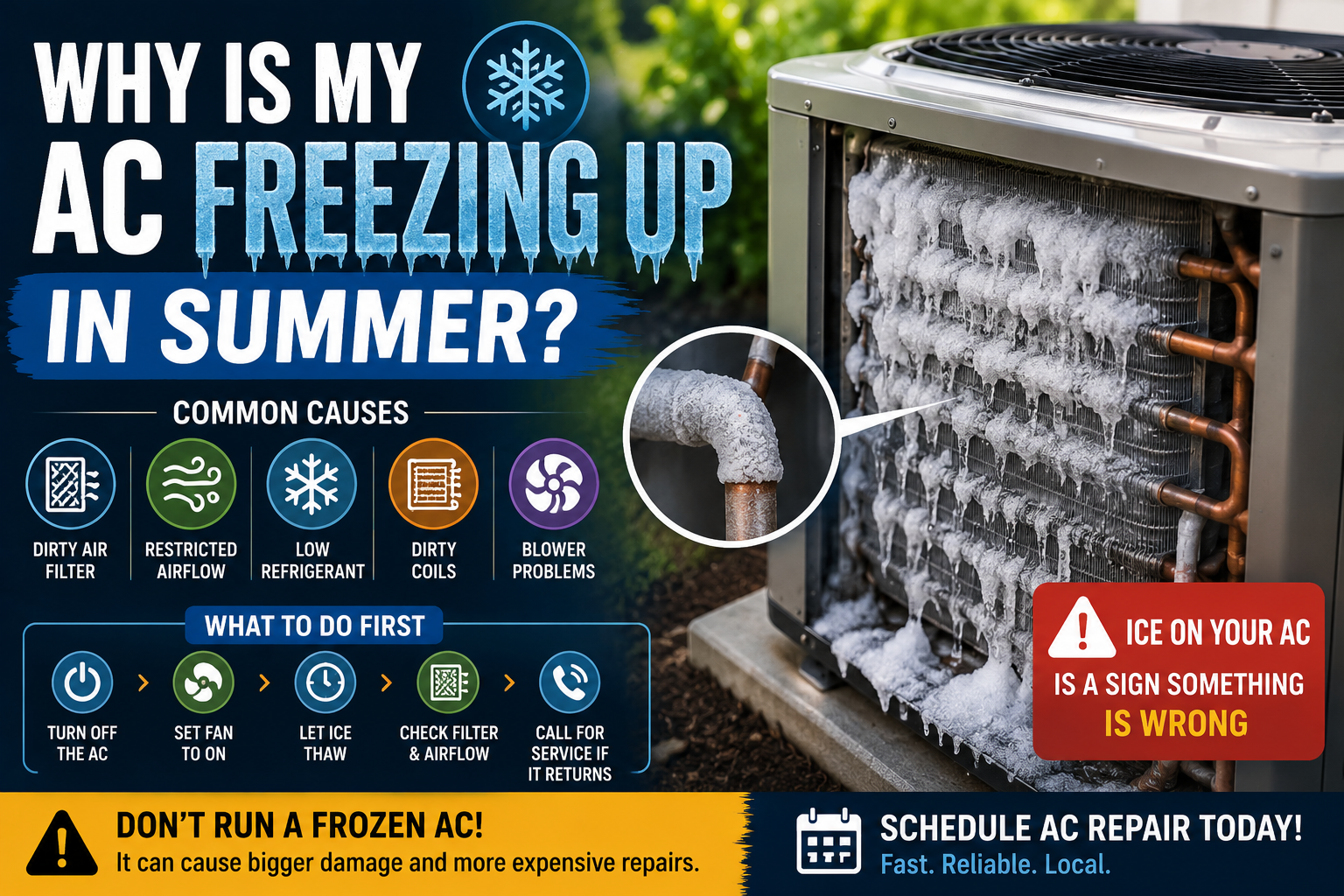
If you notice ice forming on your air conditioner during summer, your system is telling you something is wrong. While a frozen AC may still run for a short period, continuing to operate it can lead to larger repairs and extended cooling loss.

Quick Answer

An air conditioner freezes up when airflow becomes restricted or the refrigerant system cannot absorb heat properly. Common causes include dirty air filters, blocked vents, refrigerant leaks, dirty coils, or blower motor problems. Turning the system off and scheduling professional diagnosis is often the safest next step.

Fast Decision Guide

Ice On Refrigerant Lines?

Restricted airflow or low refrigerant are often responsible.

Ice On Indoor Coil?

The system may not be moving enough air across the evaporator coil.

System Still Running?

Continuing to run a frozen AC can make the problem worse.

Why Homeowners Call 1st Choice Heating & Cooling

  • Licensed and insured HVAC technicians
  • Same-day AC repair available in many cases
  • Serving Waukesha and surrounding communities
  • Residential cooling system specialists
  • Emergency HVAC service available

Why Ice Forms on an Air Conditioner

Many homeowners assume ice means their air conditioner is working harder than normal.

The opposite is usually true.

When an AC freezes, the system is often struggling to move heat properly. As temperatures inside the coil drop too low, moisture freezes and ice begins to form.

The longer the issue continues, the more cooling performance suffers.

Most Common Reasons an AC Freezes Up

Dirty Air Filter

Restricted airflow is one of the most common causes of a frozen air conditioner.

  • Reduced airflow across the coil
  • Lower coil temperatures
  • Ice formation
  • Reduced cooling performance

Blocked Supply or Return Vents

Closed or blocked vents can disrupt airflow throughout the home and contribute to freezing problems.

Low Refrigerant Levels

A refrigerant leak changes system pressures and can cause temperatures inside the coil to drop below freezing.

Common signs include:

  • Ice buildup
  • Warm air from vents
  • Long run times
  • Poor cooling performance

Dirty Evaporator Coil

A dirty indoor coil reduces heat transfer and can contribute to freezing conditions.

Blower Motor Problems

If the blower cannot move enough air across the coil, ice formation becomes more likely.

What To Do If Your AC Is Frozen

  1. Turn the thermostat off
  2. Switch the fan to “On”
  3. Replace the air filter if dirty
  4. Check that vents are open
  5. Allow ice to thaw completely
  6. Schedule service if the problem returns

Can You Wait or Should You Call Today?

Usually OK To Monitor

Dirty filter discovered and airflow restored.

Schedule Service Soon

Ice returns after thawing or cooling remains weak.

Call Immediately

Warm air, refrigerant concerns, electrical issues, or complete cooling loss.

What This Problem Could Cost If Ignored

Problem Potential Outcome
Dirty Filter Reduced efficiency and higher bills
Refrigerant Leak Compressor damage
Frozen Coil Extended cooling loss
System Overworking Premature equipment failure

What We Commonly See During Wisconsin Summers

In southeastern Wisconsin, frozen air conditioners often appear during the first extended heat wave of the season.

Systems that have dirty filters, low refrigerant, or deferred maintenance may operate normally during mild weather but struggle when temperatures rise and cooling demand increases.

If your AC continues freezing up after changing the filter and restoring airflow, professional diagnosis can help prevent larger cooling system repairs.


Explore AC Repair Services

When Replacement May Be Worth Discussing

Sometimes freezing issues are a symptom of larger system problems.

Replacement may be worth evaluating when:

  • The system is over 15 years old
  • Major repairs are needed
  • Cooling performance continues declining
  • Repair costs keep increasing
  • Efficiency has dropped significantly

AC Repair Service Areas

1st Choice Heating & Cooling provides cooling services throughout:

Waukesha
Muskego
New Berlin
West Allis
Franklin
Oak Creek
Pewaukee
Greenfield

Frozen AC FAQs

Should I turn my AC off if it’s frozen?

Yes. Turning the system off allows ice to thaw and helps prevent additional strain on components.

Can a dirty air filter cause my AC to freeze?

Yes. Restricted airflow is one of the most common causes of freezing.

Why is there ice on my refrigerant line?

Low refrigerant, airflow restrictions, or coil issues may be responsible.

Will the ice go away on its own?

The ice may melt, but the underlying problem often remains.

Can low refrigerant cause freezing?

Yes. Refrigerant leaks are a common cause of frozen coils.

Can I keep running a frozen air conditioner?

Continuing to operate a frozen system can worsen the problem and increase repair costs.

When should I call for AC repair?

If freezing returns after replacing the filter and thawing the system, professional service is recommended.

Schedule AC Repair in Waukesha, WI

If your air conditioner is freezing up, blowing warm air, or struggling to cool your home, the simplest next step is scheduling a professional inspection before the problem gets worse.
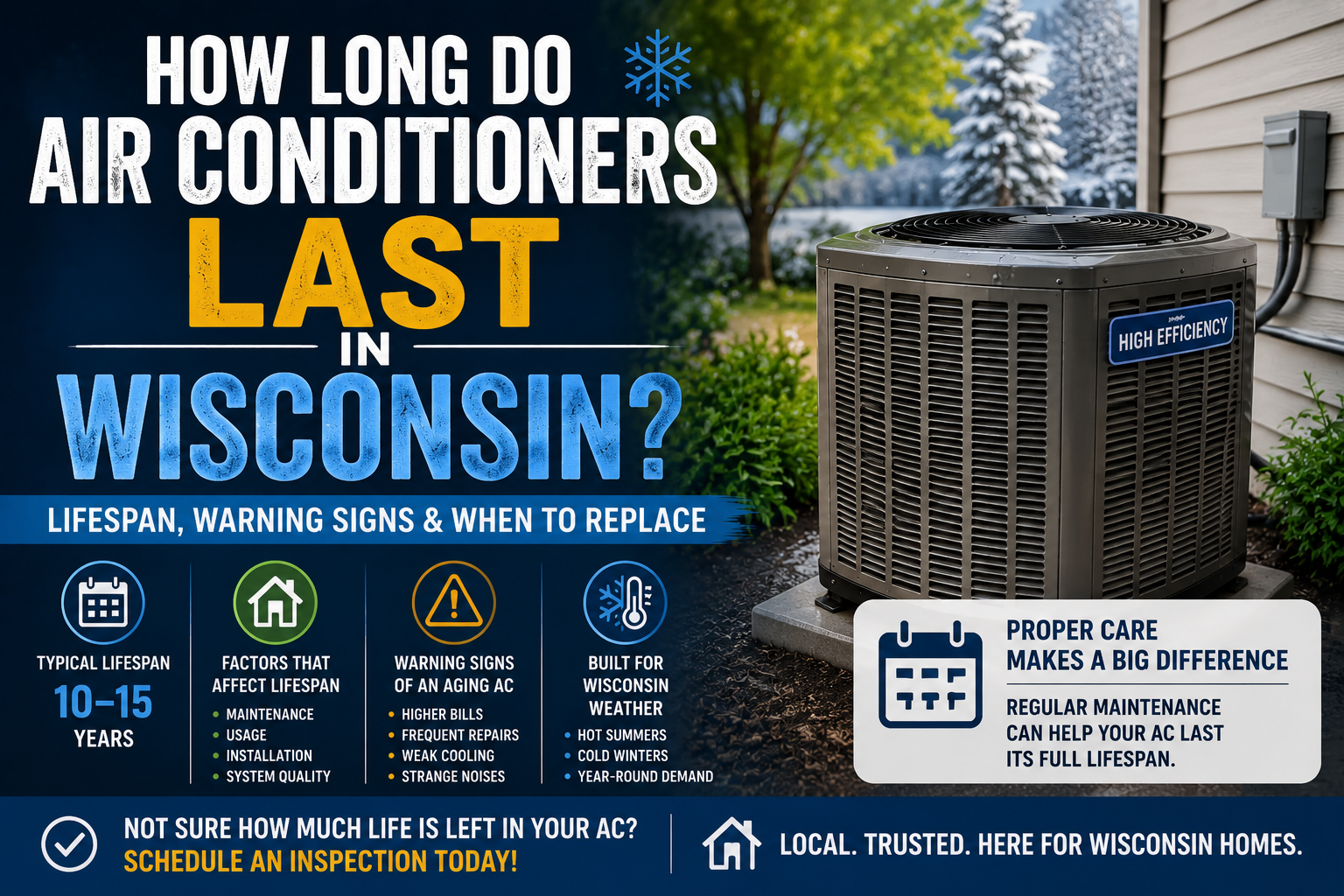
How Long Do Air Conditioners Last in Wisconsin?

How long do air conditioners last?

Most air conditioners last between 10 and 15 years, but lifespan depends heavily on maintenance, usage, installation quality, and weather conditions. In Wisconsin, where systems often sit idle for part of the year and then work hard during summer heat waves, some units exceed 15 years while others struggle much sooner.

Quick Answer

Most residential air conditioners last 10–15 years. Systems that receive regular maintenance often last longer, while neglected units may experience major failures much sooner. If your AC is over 12 years old and beginning to require repairs, it may be time to evaluate replacement options.

Fast Decision Guide

Less Than 10 Years Old?

Most systems still have useful life remaining if repairs are relatively minor.

10–15 Years Old?

Pay close attention to repair frequency, efficiency, and overall performance.

15+ Years Old?

Major repairs often make replacement worth serious consideration.

Why Homeowners Call 1st Choice Heating & Cooling

  • Licensed and insured HVAC technicians
  • Residential cooling system specialists
  • Honest repair-versus-replacement guidance
  • Serving Waukesha and surrounding communities
  • Same-day service available in many cases

How Long Should an Air Conditioner Last?

While manufacturers often advertise equipment lifespan estimates, actual performance depends on how the system is used and maintained.

Two identical systems installed the same year can age very differently based on maintenance history, installation quality, filter changes, and operating conditions.

That’s why age alone should never determine whether replacement is necessary.

Average Air Conditioner Lifespan

System Age Typical Condition
0–5 Years Usually operating near peak efficiency
6–10 Years Normal wear begins appearing
10–15 Years Repairs become more common
15+ Years Replacement evaluation often recommended

What Affects AC Lifespan?

Maintenance History

Routine maintenance remains one of the biggest factors influencing equipment longevity.

  • Regular tune-ups
  • Clean coils
  • Filter replacement
  • Electrical inspections
  • Refrigerant monitoring

Installation Quality

Improper sizing or installation mistakes can shorten equipment life from the beginning.

An oversized or undersized system often experiences unnecessary stress and reduced efficiency.

Operating Conditions

Long periods of extreme summer heat force systems to work harder and can accelerate wear on key components.

Airflow Restrictions

Dirty filters, blocked vents, and ductwork issues increase strain on the entire cooling system.

Signs Your Air Conditioner May Be Nearing the End of Its Life

Frequent Repairs

Repeated service calls often indicate growing system wear.

Higher Utility Bills

Declining efficiency typically increases operating costs.

Uneven Cooling

Some rooms may remain uncomfortable despite long run times.

Struggling During Hot Weather

Older systems often have difficulty keeping up during peak summer temperatures.

What Delaying Replacement Can Cost

Issue Potential Impact
Older Equipment Higher energy consumption
Repeated Repairs Growing maintenance expenses
Declining Efficiency Increased utility bills
Unexpected Breakdown Emergency replacement pressure

Repair or Replace?

Usually Repair

System under 10 years old with a minor repair need.

Evaluate Carefully

System 10–15 years old requiring moderate repairs.

Consider Replacement

System over 15 years old with major component failures.

What We Commonly See in Wisconsin Homes

Many Wisconsin homeowners begin considering replacement between years 12 and 15. Systems often continue operating beyond that point, but efficiency, comfort, and reliability can decline noticeably.

The most common triggers are rising energy bills, repeated repair visits, and difficulty maintaining indoor temperatures during the hottest weeks of summer.

If your air conditioner is aging and repairs are becoming more common, it may be worth comparing repair costs against long-term replacement value.


Explore AC Repair Services

When AC Replacement May Make More Financial Sense

  • System is more than 15 years old
  • Major repairs are needed
  • Cooling performance continues declining
  • Utility bills have increased significantly
  • Repair costs are becoming frequent

Serving Homeowners Throughout Southeastern Wisconsin

1st Choice Heating & Cooling provides cooling services throughout:

Waukesha
Muskego
New Berlin
West Allis
Franklin
Oak Creek
Pewaukee
Greenfield

AC Lifespan FAQs

How long do air conditioners usually last?

Most residential air conditioners last between 10 and 15 years.

Can an AC last 20 years?

Some well-maintained systems do, but efficiency and reliability often decline significantly.

Should I replace a 15-year-old air conditioner?

If major repairs are needed, replacement is often worth evaluating.

What shortens AC lifespan?

Poor maintenance, airflow restrictions, improper installation, and heavy system strain.

Does regular maintenance help an AC last longer?

Yes. Preventative maintenance can significantly improve system longevity.

How do I know if replacement is better than repair?

Age, repair costs, efficiency, and reliability should all be considered together.

Are newer air conditioners more efficient?

Modern systems are generally much more energy efficient than older equipment.

Not Sure Whether Your AC Has Years Left?

If your system is getting older and you’re wondering whether repairs still make sense, the simplest next step is a professional evaluation. You’ll get a clearer picture of the system’s condition and your available options.

AC Repair vs AC Replacement: How to Know Which Makes More Sense

AC repair vs replacement: which suits you?

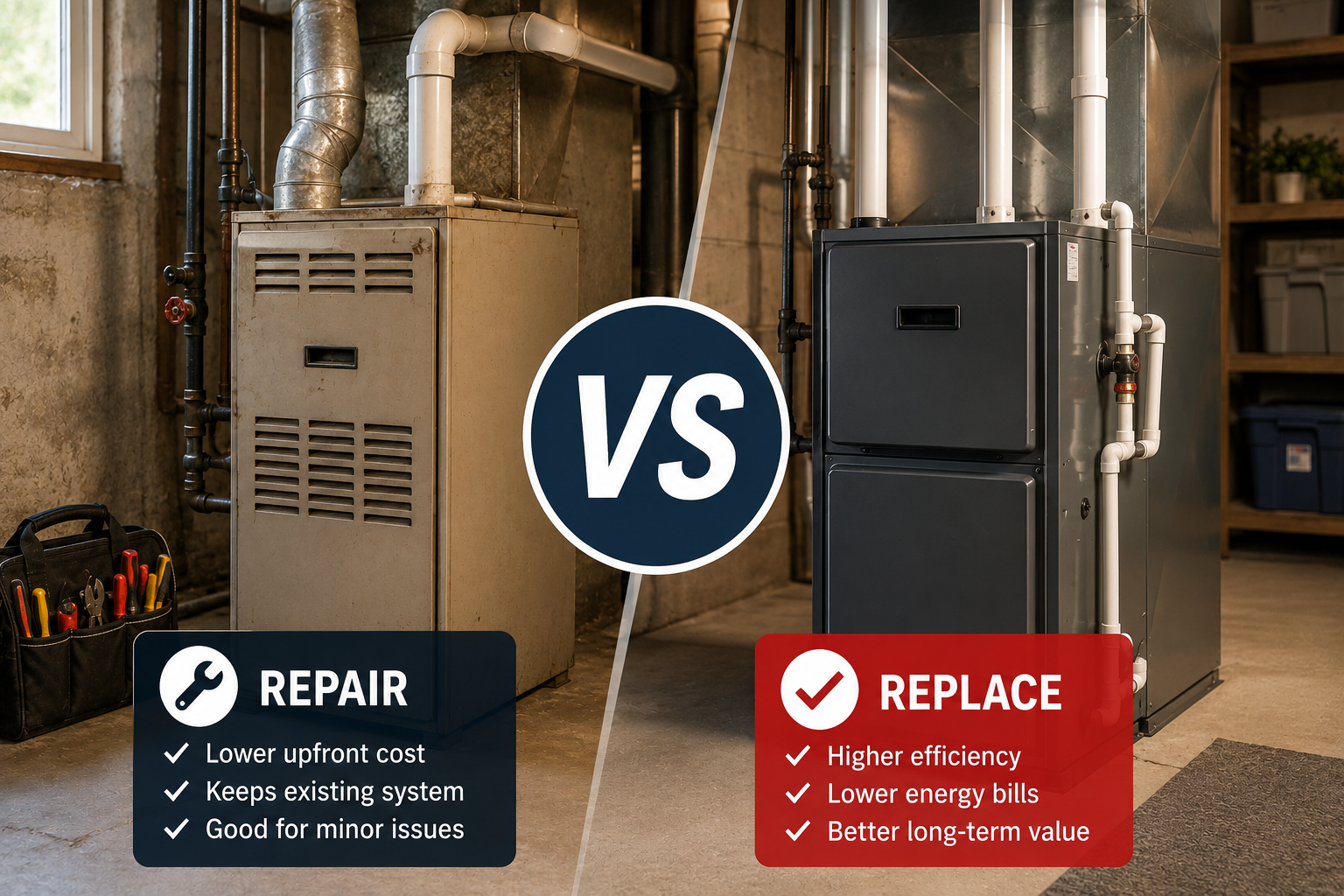
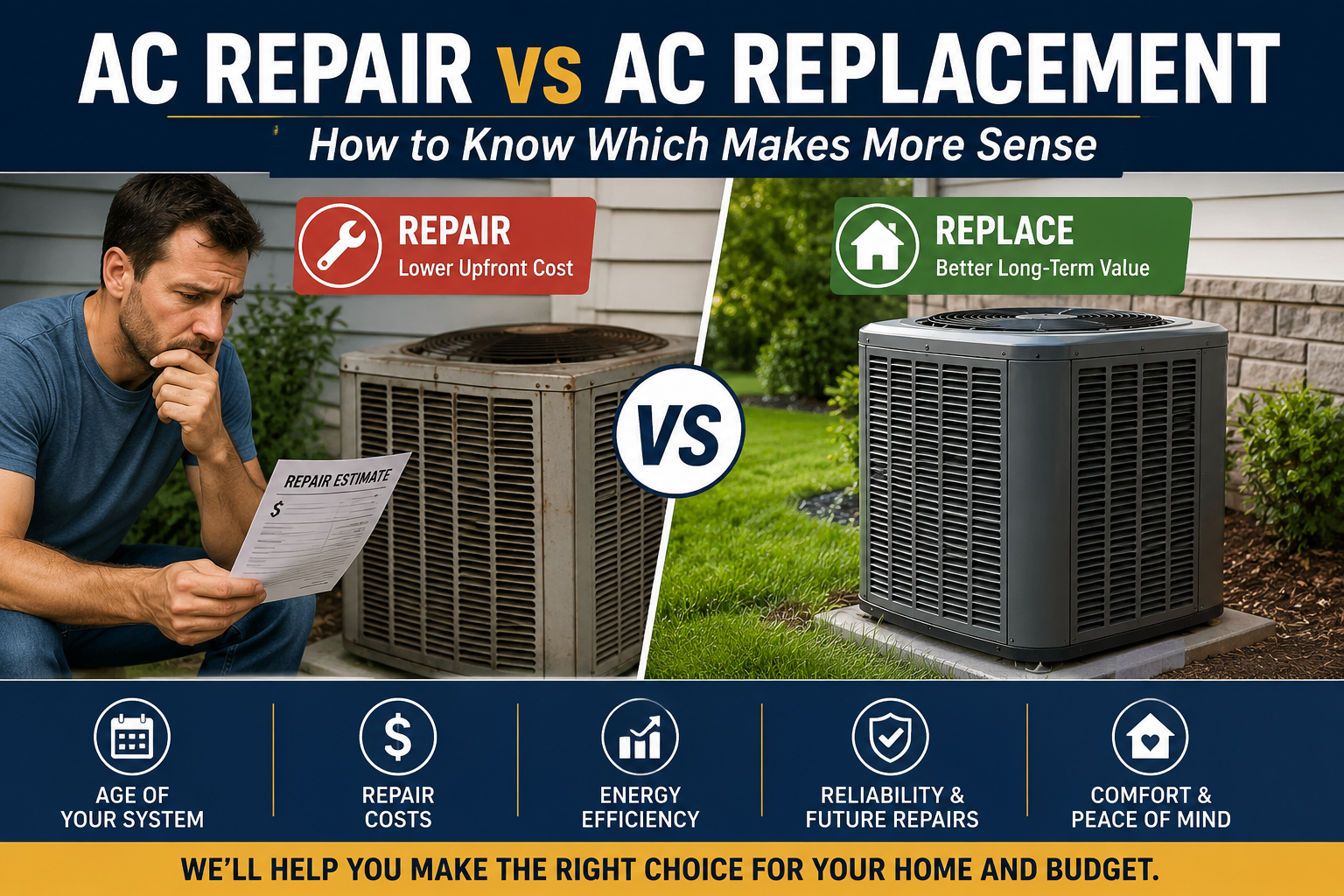
If your air conditioner is struggling to keep up, breaking down frequently, or facing an expensive repair, you may be wondering whether it makes more sense to repair the system or replace it altogether. The right answer depends on the age of the equipment, repair costs, efficiency, and long-term reliability.

Quick Answer

If your AC is less than 10 years old and the repair is relatively minor, repairing the system often makes sense. If the unit is older, frequently breaking down, or facing a major repair, replacement may provide better long-term value and lower operating costs.

Fast Decision Guide

System Under 10 Years Old?

Minor repairs are often worth making if the unit has otherwise been reliable.

Repair Estimate Is High?

Large repair bills may make replacement a smarter long-term investment.

Frequent Breakdowns?

Repeated repairs often indicate larger system wear and declining reliability.

Why Homeowners Call 1st Choice Heating & Cooling

  • Licensed and insured HVAC technicians
  • Honest repair-versus-replacement recommendations
  • Serving Waukesha and surrounding communities
  • Residential AC repair and installation expertise
  • Financing options available for qualifying installations

The Real Question Isn’t Repair or Replace

Many homeowners assume the decision comes down to cost alone.

In reality, the better question is:

“Which option will cost less over the next several years while keeping my home comfortable?”

Sometimes a repair is clearly the best choice.

Other times, replacement prevents ongoing expenses and frustration.

How Old Is Your Air Conditioner?

Age is one of the strongest indicators when deciding between repair and replacement.

  • 0–5 Years: Repair is usually recommended
  • 6–10 Years: Depends on repair cost and system condition
  • 10–15 Years: Evaluate carefully before investing in major repairs
  • 15+ Years: Replacement often makes more financial sense

Modern air conditioners are significantly more efficient than systems installed 10–15 years ago.

The 50% Rule

Many HVAC professionals use a simple guideline called the 50% Rule.

If a repair costs more than 50% of what a replacement would cost, replacement is usually worth serious consideration.

Repair Cost Recommendation
Minor Repair Usually repair
Moderate Repair Evaluate age and condition
Major Component Failure Compare against replacement cost
50%+ of New System Cost Replacement often makes more sense

Signs Replacement May Be the Better Option

Frequent Repairs

Multiple service calls in the last few years can indicate larger system decline.

High Utility Bills

Older systems often consume significantly more energy.

Uneven Cooling

Rooms that never stay comfortable may indicate declining performance.

Major Component Failure

Compressor or evaporator coil failures can be expensive repairs.

When Repair Usually Makes Sense

  • System is under 10 years old
  • Repair cost is relatively low
  • No history of recurring breakdowns
  • Energy bills remain reasonable
  • Cooling performance is otherwise good

In these situations, scheduling professional AC repair service is often the most cost-effective option.

When Replacement Usually Makes Sense

  • System is 15+ years old
  • Repair costs are significant
  • Utility bills continue increasing
  • Comfort problems are becoming common
  • Major components have failed

Replacing an aging system can improve comfort, efficiency, reliability, and long-term operating costs.

What We See Most Often in Wisconsin Homes

In southeastern Wisconsin, many homeowners face this decision after 10–15 years of service when older systems begin struggling during periods of extended summer heat.

The most common replacement triggers include compressor failure, rising energy bills, and repeated repair visits over several seasons.

Repair vs Replacement Comparison

Factor Repair Replace
Upfront Cost Lower Higher
Energy Efficiency Unchanged Improved
Reliability Depends on age Highest
Long-Term Cost May increase Often lower
Warranty Coverage Limited New manufacturer warranty

AC Repair vs Replacement FAQs

How long should an air conditioner last?

Most systems last 10–15 years with proper maintenance.

What is the 50% Rule for HVAC?

If the repair cost exceeds roughly 50% of replacement cost, replacement is often the better investment.

Should I replace a 15-year-old AC?

If significant repairs are needed, replacement is often worth considering.

Do new air conditioners lower energy bills?

Modern systems are generally much more efficient than older units.

Can I repair a compressor?

Sometimes, but compressor repairs are often among the most expensive AC repairs.

Is financing available for AC replacement?

Many homeowners use financing to spread replacement costs over time.

Need Help Deciding Between AC Repair and Replacement?

If you’re comparing repair costs against replacement options, the simplest next step is having an HVAC professional evaluate the system and explain both options clearly.

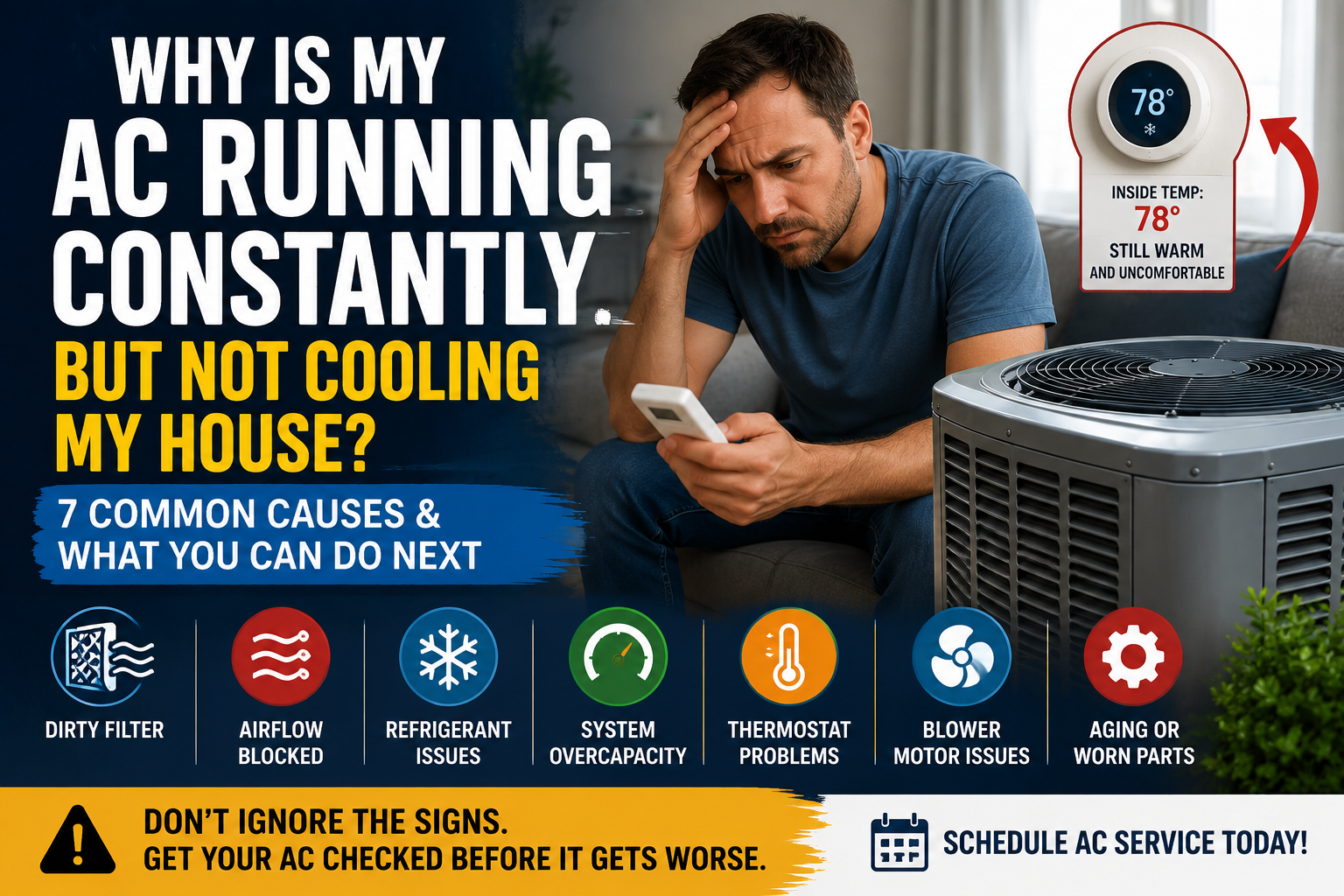
Why Is My AC Running Constantly But Not Cooling My House?

Why is my AC running constantly?

If your air conditioner is running constantly but your home still feels warm, the issue could be anything from a clogged filter to low refrigerant or a failing compressor. While some causes are simple to address, others can quickly lead to expensive repairs if ignored.

Quick Answer

An AC that runs constantly without cooling properly is usually dealing with restricted airflow, low refrigerant, dirty coils, thermostat issues, or an aging system struggling to keep up with demand. If basic maintenance doesn’t solve the issue, professional diagnosis is recommended.

Fast Decision Guide

Running Non-Stop?

If your AC runs for hours without reaching the thermostat setting, efficiency problems or cooling system issues may be present.

Air Feels Warm?

Warm air from vents often points to refrigerant problems, dirty coils, or compressor issues.

Energy Bills Rising?

An overworked air conditioner can significantly increase monthly utility costs.

Why Homeowners Call 1st Choice Heating & Cooling

  • Licensed and insured HVAC technicians
  • Same-day AC repair available in many cases
  • Serving Waukesha and surrounding Milwaukee-area communities
  • Residential cooling system specialists
  • Emergency HVAC service available

Why an AC May Run Constantly Without Cooling

Your air conditioner is designed to cycle on and off throughout the day. During hot Wisconsin summers, longer run times are normal, but your system should still reach the temperature set on your thermostat.

If it runs continuously and never catches up, something is preventing the system from cooling efficiently.

Common Reasons Your AC Won’t Stop Running

Dirty Air Filter

A clogged filter restricts airflow and makes it difficult for your system to circulate cooled air.

  • Reduced airflow
  • Longer run times
  • Higher energy bills
  • Potential evaporator coil freezing

Low Refrigerant Levels

Refrigerant allows your AC to absorb heat from inside your home. If levels are low due to a leak, cooling performance drops significantly.

  • Warm air from vents
  • Ice on refrigerant lines
  • Extended run cycles
  • Poor temperature control

Dirty Condenser Coils

Outdoor condenser coils release heat collected from your home. When covered in dirt or debris, cooling efficiency drops.

Thermostat Problems

Sometimes the issue is not the air conditioner itself.

  • Incorrect thermostat settings
  • Faulty temperature readings
  • Sensor problems
  • Programming issues

Aging Equipment

Older systems often lose efficiency and struggle during extended periods of hot weather.

If your system is more than 10–15 years old, it may be time to consider whether repair or replacement makes more financial sense.

What This Problem Could Cost If Ignored

Issue Potential Result
Dirty Filter Higher utility bills and airflow restrictions
Low Refrigerant Compressor damage and expensive repairs
Dirty Coils Reduced cooling capacity and longer run times
System Overworking Premature equipment failure

Quick Things You Can Check Before Calling for Service

  1. Replace the air filter if dirty
  2. Verify thermostat settings
  3. Check that supply vents are open
  4. Inspect the outdoor unit for debris
  5. Listen for unusual sounds
  6. Confirm the breaker has not tripped

Can You Wait or Should You Call Today?

Usually OK To Monitor

Dirty filter, mild airflow reduction, minor thermostat adjustments.

Schedule Service Soon

System running all day, uneven cooling, rising electric bills.

Call Immediately

Warm air, frozen coils, burning smells, electrical concerns.

What We See Most Often During Wisconsin Summers

In climates like southeastern Wisconsin, prolonged summer heat often exposes cooling issues that went unnoticed during spring. The most common problems include dirty filters, frozen evaporator coils, refrigerant leaks, and aging systems struggling to maintain indoor temperatures.

If your system is running constantly but your home still isn’t comfortable, professional diagnosis can often identify the problem before it becomes a larger repair.


Explore AC Repair Services

When AC Replacement May Be Worth Considering

If repairs are becoming more frequent, replacement may provide better long-term value.

  • System is 10–15+ years old
  • Frequent repair history
  • Cooling performance continues declining
  • High summer utility bills
  • Major component failure

AC Running Constantly FAQs

Is it normal for my AC to run all day?

Longer run times are normal during extreme heat, but the system should still reach the thermostat setting.

Can a dirty air filter cause my AC to run constantly?

Yes. Restricted airflow can significantly reduce cooling performance.

Why is my AC running but not cooling?

Common causes include low refrigerant, dirty coils, airflow restrictions, thermostat issues, or compressor problems.

Will running constantly damage my AC?

Extended operation increases wear on components and can shorten equipment life.

Should I repair or replace my AC?

That depends on the system age, repair costs, and overall condition of the equipment.

Can low refrigerant fix itself?

No. Refrigerant loss usually indicates a leak that requires professional repair.

Schedule AC Repair in Waukesha, WI

If your air conditioner is running constantly but still not keeping your home comfortable, the simplest next step is scheduling a professional inspection to identify the underlying issue.

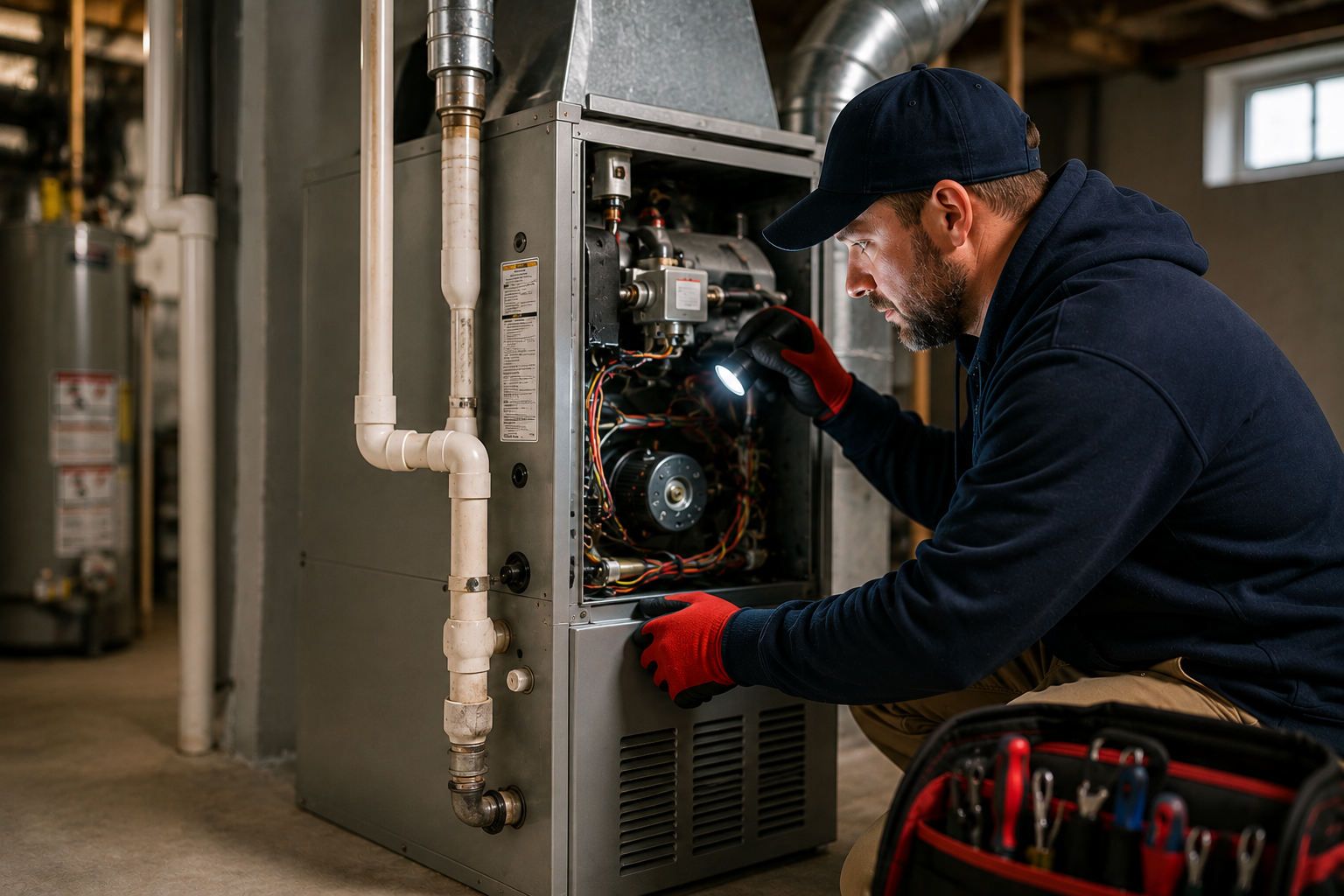
Furnace Not Working? Common Causes and What To Check First in Waukesha, WI

If your furnace stops working during winter, the issue may be something simple like a dirty air filter or thermostat setting, or it could point to a larger heating system problem that requires professional repair.

Quick Answer

If your furnace is not working, common causes include dirty air filters, thermostat problems, ignition failure, airflow restrictions, or blower motor issues. Some problems are simple to identify, while others require professional diagnosis to safely restore heat.

Fast Decision Guide

Furnace Completely Stopped?

Start by checking the thermostat, circuit breaker, and air filter before assuming a major furnace failure.

Blowing Cold Air?

Ignition problems, airflow restrictions, or thermostat issues are some of the most common causes.

Hearing Loud Noises?

Grinding, banging, or squealing noises may indicate blower motor or mechanical issues that should be inspected quickly.

Why Homeowners Call 1st Choice Heating & Cooling

  • Licensed and insured HVAC technicians
  • Same-day furnace repair available in many cases
  • Serving Waukesha and surrounding Milwaukee-area communities
  • Residential heating repair expertise
  • Emergency heating service during winter weather

Why Furnaces Stop Working

Furnaces often show warning signs before complete breakdowns happen. In colder Wisconsin winters, heating systems run heavily for long stretches, increasing wear on filters, motors, ignition systems, and airflow components.

The key is determining whether the issue is something minor or a sign of a larger repair problem.

Common Reasons Your Furnace Isn’t Working

Dirty Air Filter

A clogged air filter is one of the most common furnace problems homeowners experience.

  • Weak airflow from vents
  • Overheating
  • Furnace shutdowns
  • Reduced heating performance
  • Higher energy bills

Thermostat Problems

Incorrect thermostat settings or thermostat malfunctions can prevent the furnace from operating properly.

  • Thermostat not set to “Heat”
  • Dead batteries
  • Incorrect temperature settings
  • Screen not responding

Pilot Light or Ignition Failure

If the ignition system fails, the furnace may not produce heat at all.

  • Dirty ignition components
  • Gas supply interruptions
  • Flame sensor problems
  • Ignition control failure

Blower Motor Problems

The blower motor pushes warm air through the ductwork. If it fails, homeowners may experience weak airflow, loud noises, or intermittent heating.

Tripped Circuit Breakers

Sometimes the furnace will not turn on because of a tripped breaker or electrical interruption.

Quick Things You Can Check Before Calling for Service

  1. Verify the thermostat is set to “Heat”
  2. Replace the air filter if dirty
  3. Check the circuit breaker
  4. Make sure vents are open and unobstructed
  5. Listen for unusual noises
  6. Check if the furnace is attempting to start

If the furnace still does not heat properly after these steps, professional inspection is usually recommended.

Signs You Should Call for Furnace Repair

No Heat

Complete heating loss during winter should be addressed quickly.

Cold Air From Vents

This may indicate ignition failure, airflow restrictions, or overheating shutdowns.

Burning Smells

Persistent smells may indicate electrical or mechanical issues.

Loud Noises

Banging, squealing, or grinding sounds often point to mechanical wear.

Problems Homeowners Should Not Attempt To Repair

Problem Why Professional Service Is Needed
Ignition Failure Gas and electrical diagnostics are required
Blower Motor Repair Mechanical and electrical testing is needed
Heat Exchanger Issues Potential combustion safety concern
Electrical Failures High-voltage components require trained repair
Gas Valve Problems Licensed HVAC diagnosis is recommended

If your furnace still is not heating properly after basic troubleshooting, scheduling service early can help prevent larger repairs.


Explore Furnace Repair Services

What Professional Furnace Repair Typically Includes

1Inspect thermostat and controls

2Check ignition and safety systems

3Test airflow and blower operation

4Inspect filters and duct airflow

5Diagnose electrical or mechanical problems

6Verify safe operation after repair

When Furnace Replacement May Be Worth Considering

Sometimes repeated repair issues point toward larger system wear or declining efficiency.

  • Furnace is 15–20+ years old
  • Repairs are becoming frequent
  • Heating performance is declining
  • Energy bills continue rising
  • Major components are failing

Furnace Repair Service Areas

1st Choice Heating & Cooling provides furnace repair services throughout:

Waukesha
Muskego
New Berlin
West Allis
Franklin
Oak Creek
Pewaukee
Greenfield

Furnace Repair FAQs

Why is my furnace running but not heating?

This can be caused by airflow restrictions, thermostat problems, ignition failure, or blower motor issues.

Can a dirty air filter stop a furnace from working?

Yes. Restricted airflow can cause overheating and furnace shutdowns.

Why is my furnace blowing cold air?

Possible causes include thermostat settings, ignition problems, airflow issues, or overheating shutdowns.

What should I check before calling for repair?

Check the thermostat, air filter, circuit breaker, and airflow around vents first.

Why does my furnace keep shutting off?

Short cycling can result from overheating, airflow restrictions, thermostat issues, or ignition problems.

When should I replace my furnace instead of repairing it?

Replacement may make sense if the furnace is older, inefficient, or requires frequent repairs.

Can delaying furnace repair increase costs?

Yes. Continuing to operate a damaged system can worsen mechanical problems over time.

Schedule Furnace Repair in Waukesha, WI

If your furnace is not turning on, is blowing cold air, or is making unusual noises, the next step is to schedule a professional inspection before the issue worsens.

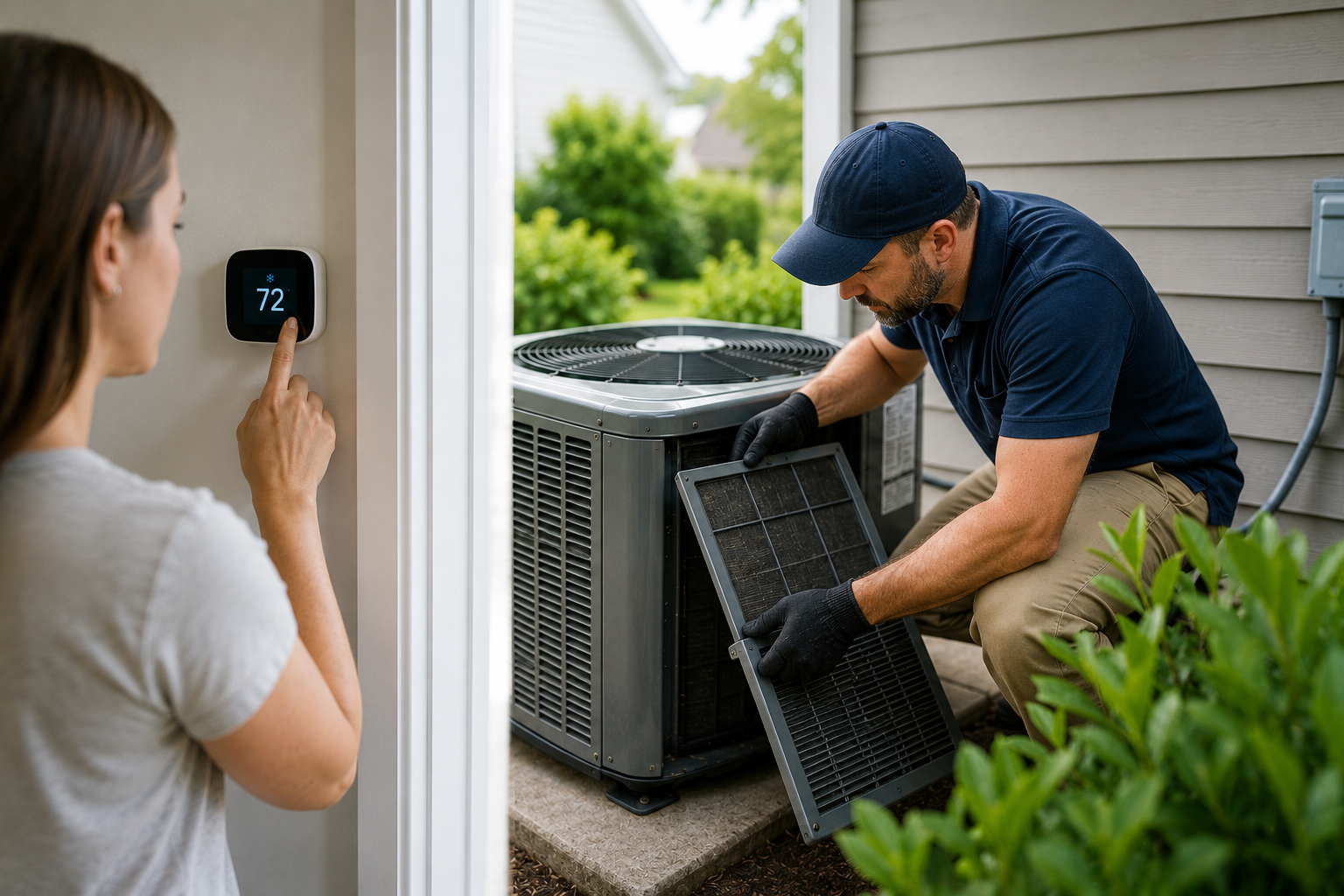
AC Not Cooling? Here’s What To Check Before Calling for Repair in Waukesha, W

If your AC is blowing warm air or struggling to cool the home, there are a few things you can safely check before scheduling service. Some issues are simple airflow or thermostat problems, while others require professional AC repair.

Quick Answer

If your AC is not cooling properly, common causes include thermostat issues, clogged air filters, blocked outdoor airflow, or electrical problems. If basic troubleshooting does not restore cooling, the issue may involve refrigerant levels, airflow restrictions, or compressor problems that require professional repair.

Fast Decision Guide

AC Running But Blowing Warm Air?

Start with the thermostat, air filter, and outdoor unit airflow before assuming a major repair is needed.

System Won’t Turn On?

Check the circuit breaker and thermostat settings first. Electrical issues may require professional diagnosis.

Cooling Keeps Getting Worse?

Delaying repairs can increase strain on the system and lead to more expensive damage during peak summer temperatures.

Why Homeowners Call 1st Choice Heating & Cooling

  • Licensed and insured HVAC technicians
  • Same-day AC repair available in many cases
  • Serving Waukesha and surrounding Milwaukee-area communities
  • Residential cooling repair expertise
  • Emergency repair support during summer heat

What To Check Before Calling for AC Repair

1. Check Your Thermostat

Make sure the thermostat is set to “Cool” and the temperature is lower than the current indoor temperature.

2. Replace the Air Filter

Dirty filters can restrict airflow and reduce cooling performance. Replace the filter if it looks clogged or dusty.

3. Inspect the Outdoor Unit

Clear away leaves, grass, and debris around the condenser unit to improve airflow and cooling efficiency.

4. Check the Circuit Breaker

If the system will not turn on at all, check for a tripped breaker or electrical interruption.

When It’s Time To Call a Professional

Some cooling issues require specialized tools, electrical testing, or refrigerant handling.

  • Warm air coming from vents
  • Ice buildup on refrigerant lines
  • Buzzing or grinding noises
  • Water leaking around the system
  • Repeated breaker trips
  • Weak airflow throughout the home

If your AC is still not cooling after basic troubleshooting, scheduling service early can help prevent larger repairs.


Explore AC Repair Services

AC Repair Service Areas

1st Choice Heating & Cooling provides AC repair services throughout:

Waukesha
Muskego
New Berlin
West Allis
Franklin
Oak Creek
Pewaukee
Greenfield

Frequently Asked Questions

Why is my AC running but not cooling?

This may be caused by restricted airflow, thermostat issues, refrigerant problems, or compressor failure.

Can a dirty air filter stop my AC from cooling?

Yes. Dirty filters can restrict airflow and significantly reduce cooling performance.

Why does my AC keep tripping the breaker?

Repeated breaker trips often signal electrical or compressor-related problems that require professional inspection.

When should I call for AC repair?

If the system continues blowing warm air after basic troubleshooting or shows signs of electrical or refrigerant issues.

Schedule AC Repair in Waukesha, WI

If your AC is still not cooling properly, the simplest next step is scheduling a professional diagnosis before the issue worsens.

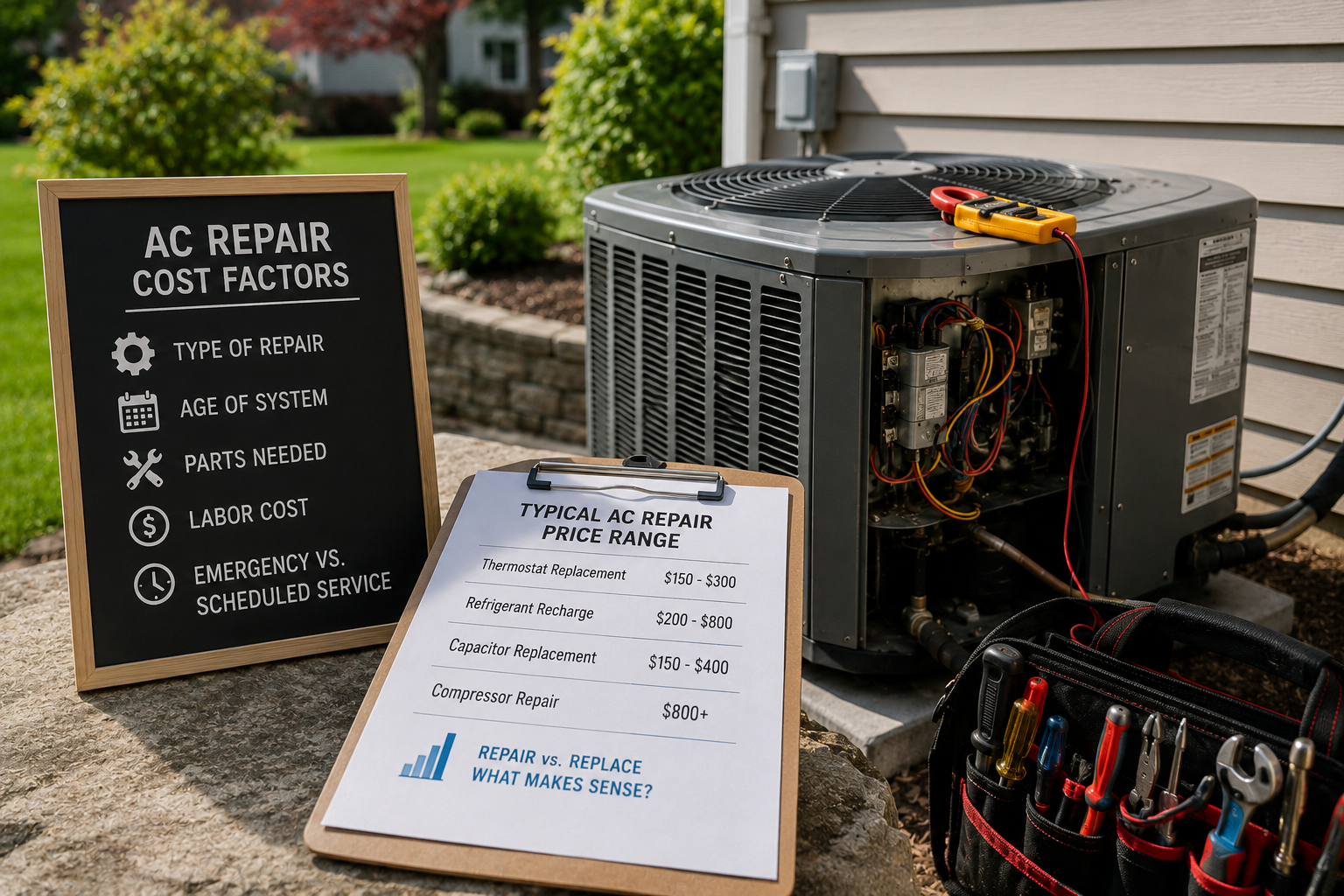
AC Repair Cost in Waukesha, WI: What Homeowners Should Expect

AC repair costs can vary depending on the issue, the age of the system, and whether major components are involved. Some repairs are relatively minor, while others may indicate larger system problems that affect long-term reliability and efficiency.

Quick Answer

Most homeowners in Waukesha can expect common AC repairs to cost between $150 and $600 depending on the issue, the age of the system, and the parts required. Larger repairs involving compressors, refrigerant leaks, or major electrical components can cost significantly more.

Fast Decision Guide

AC Suddenly Stopped Working?

Failed capacitors, thermostat problems, and electrical faults are often repairable if diagnosed early.

Repair vs. Replacement?

Older systems with frequent repairs may become more expensive long-term than replacement.

Trying To Avoid Bigger Costs?

Scheduling service when symptoms first appear often reduces repair complexity and system damage.

Why Homeowners Call 1st Choice Heating & Cooling

  • Licensed and insured HVAC technicians
  • Same-day AC repair available in many cases
  • Serving Waukesha and surrounding Milwaukee-area communities
  • Residential cooling system expertise
  • Emergency repair support during summer heat

What Impacts AC Repair Cost?

Air conditioning repair costs vary because every system issue is different. Some repairs involve simple electrical components, while others require major diagnostics or replacement parts.

Type of Repair

Compressor, refrigerant, and motor repairs are usually more expensive than electrical fixes.

System Age

Older systems may require harder-to-find parts or larger repairs.

Emergency Service

After-hours or same-day emergency service may affect total repair pricing.

Parts & Labor

Repair complexity and replacement components both impact final cost.

Average AC Repair Costs in Waukesha

Common AC Repair Typical Cost Range
Thermostat Replacement $150–$300
Capacitor Replacement $150–$400
Refrigerant Recharge $200–$800
Contactor Replacement $150–$350
Fan Motor Replacement $300–$700
Compressor Repair $800+

Actual pricing depends on system condition, repair complexity, and equipment type.

Common AC Problems That Require Repair

Warm Air Coming From Vents

Warm air may indicate refrigerant issues, compressor problems, thermostat malfunction, or frozen evaporator coils.

Strange Noises

Buzzing, rattling, or grinding sounds may point to loose components, electrical issues, or motor failure.

AC Constantly Running

Long runtime may indicate airflow restrictions, refrigerant problems, dirty coils, or aging equipment.

Water Leaks Around the System

Moisture or leaking water can signal clogged drain lines, condensation issues, or frozen coils.

When Repair Makes Sense vs. Replacement

Repair Often Makes Sense If:

  • The system is under 10–12 years old
  • The repair is isolated
  • Cooling performance has been reliable
  • Repair costs are manageable

Replacement May Make Sense If:

  • The system is 10–15+ years old
  • Repairs are becoming frequent
  • Energy bills continue rising
  • Major components are failing

If replacement becomes the better long-term option, explore installation options before peak summer demand increases.


Explore AC Installation

The 50% Rule for AC Repair

A common HVAC guideline is the “50% Rule.” If a repair costs more than roughly 50% of the value of a replacement system, many homeowners choose replacement instead of continuing to invest in aging equipment.

Example:

  • Major AC Repair: $3,500
  • New AC Installation: $6,000–$8,000

AC Repair Service Areas

1st Choice Heating & Cooling provides AC repair services throughout:

Waukesha
Muskego
New Berlin
West Allis
Franklin
Oak Creek
Pewaukee
Greenfield

Frequently Asked Questions

How much does AC repair usually cost?

Most common AC repairs range between $150 and $600, though larger repairs can cost significantly more.

What is the most expensive AC repair?

Compressor replacement is typically one of the highest-cost repairs.

Is it worth repairing an older AC unit?

It depends on system age, efficiency, repair history, and the overall cost of the repair.

Can delaying AC repair make the problem worse?

Yes. Continuing to run a damaged system can increase wear and lead to larger repairs.

Schedule AC Repair in Waukesha, WI

If your AC is blowing warm air, making unusual noises, or not cooling properly, the simplest next step is scheduling a professional inspection before the issue worsens.

Furnace Repair vs. Replacement: How To Decide What Makes Sense in Waukesha, WI

Quick Answer

If your furnace is over 15 years old, breaking down frequently, struggling to heat the home evenly, or requiring expensive repairs, replacement may be the better long-term investment. If the issue is isolated and the system still has strong performance and efficiency, repair is often the smarter short-term option. The right decision depends on repair cost, furnace age, efficiency, and how reliably the system is heating the home.


Fast Decision Guide

If the furnace stopped working suddenly

A professional inspection can determine whether the issue is repairable or if major components are failing.

If you’re comparing cost vs. long-term value

Frequent repairs and rising energy bills often make replacement more cost-effective over time.

If the system is older

Most furnaces begin experiencing higher repair frequency and lower efficiency after 15–20 years.


Local Trust Snapshot

  • Serving homeowners throughout Waukesha and nearby Milwaukee-area communities
  • Licensed and insured HVAC technicians
  • Same-day heating service available in many cases
  • Residential furnace repair and installation expertise
  • Financing options available for qualifying system replacements

How To Decide Between Furnace Repair or Replacement

A furnace problem does not automatically mean the entire system needs to be replaced. In many situations, a repair is still the most practical option.

The challenge is knowing when repairs stop making financial sense.

In colder climates like Wisconsin, heating systems work hard for long stretches during winter. Over time, wear and tear naturally increases, especially on older systems.

The decision usually comes down to four things:

  1. Furnace age
  2. Repair frequency
  3. Energy efficiency
  4. Cost of the repair itself

Consider the Age of the Furnace

Furnace lifespan plays a major role in deciding whether repair or replacement makes more sense.

Typical furnace lifespan

Furnace Type Average Lifespan
Standard gas furnace 15–20 years
High-efficiency furnace 15–20 years
Older legacy systems Often less efficient after 15 years

If the furnace is already approaching the end of its expected lifespan, investing heavily into repairs may only delay a future replacement.

Signs age may be becoming a problem

  • Uneven heating
  • Frequent breakdowns
  • Rising utility costs
  • Loud operation
  • Difficulty maintaining temperature

Older systems also tend to become less efficient over time, even when repairs are completed.


Frequency of Repairs Matters

One repair does not necessarily justify replacing a furnace.

But repeated repairs within a short period often signal deeper system wear.

Common examples

  • Ignition repairs
  • Blower motor issues
  • Thermostat failures
  • Heat exchanger concerns
  • Repeated airflow problems

If repair calls are becoming routine every heating season, replacement may reduce long-term costs and frustration.


The 50% Rule

A common HVAC guideline is the “50% Rule.”

What it means

If a repair costs more than 50% of the value of a new furnace system, replacement is usually the better long-term financial decision.

Example:

  • Major repair: $3,500
  • New furnace system: $6,000–$7,000

At that point, many homeowners choose to invest the money into a new system with updated efficiency, warranty coverage, and improved reliability.


Energy Efficiency Can Change the Math

Newer furnaces are significantly more energy efficient than many older systems still operating today.

That can impact:

  • Monthly heating costs
  • Indoor comfort
  • System runtime
  • Long-term operating expenses

Signs your current furnace may be inefficient

  • High heating bills
  • Furnace constantly running
  • Hot and cold spots throughout the home
  • Older single-stage equipment
  • Poor airflow

In areas like Waukesha and the surrounding Milwaukee suburbs, heating costs during winter can become substantial if the system is inefficient.


When Furnace Repair Usually Makes Sense

Repair is often the better option when:

  • The furnace is under 10–12 years old
  • The issue is isolated
  • Repair costs are manageable
  • The system still heats efficiently
  • Maintenance history is strong

Many furnace issues can be repaired successfully without replacing the entire system.

Learn more about Furnace Repair Services available throughout the Waukesha area.


When Furnace Replacement Is Usually the Better Option

Replacement is often recommended when:

  • The furnace is 15–20+ years old
  • Repair costs are high
  • Breakdowns are becoming frequent
  • Energy bills continue increasing
  • Major components are failing

A new system may improve:

  • Heating consistency
  • Energy efficiency
  • Indoor comfort
  • Reliability during winter

Common Mistakes Homeowners Make

Waiting Until Complete Failure

Many homeowners delay replacement discussions until the furnace completely stops working during freezing weather.

This can limit options and increase emergency costs.


Focusing Only on the Immediate Repair Cost

A smaller repair bill may seem cheaper today, but repeated repairs can exceed replacement costs over time.


Ignoring Efficiency Loss

An aging furnace may still operate while quietly driving up utility bills every month.


Replacing Too Early

Not every older furnace needs immediate replacement. Some systems still have years of reliable service left with proper maintenance.


What Furnace Replacement Typically Includes

A professional furnace installation usually involves:

  1. Evaluating home size and heating demand
  2. Determining proper furnace sizing
  3. Removing the old system
  4. Installing the new furnace
  5. Testing airflow and system performance
  6. Verifying safe operation

Proper sizing and installation are critical for long-term performance and efficiency.

Explore Furnace Installation Services to learn more about replacement options.


Service Areas

1st Choice Heating & Cooling provides furnace repair and installation services throughout:

  • Waukesha
  • Muskego
  • New Berlin
  • West Allis
  • Franklin
  • Nearby Milwaukee-area communities

FAQ

How long should a furnace last?

Most residential furnaces last between 15–20 years depending on maintenance and usage.

Is it worth repairing an old furnace?

It depends on repair cost, efficiency, and how frequently the system has needed repairs.

What is the 50% Rule for HVAC?

If a repair costs more than 50% of the value of a replacement system, replacement is often recommended.

How do I know if my furnace is inefficient?

High utility bills, uneven heating, and constant runtime are common signs.

Should I replace my furnace before winter?

Replacing before peak winter demand can help avoid emergency breakdowns and scheduling delays.

Can frequent repairs increase long-term costs?

Yes. Multiple smaller repairs can eventually exceed replacement costs.

Do new furnaces lower energy bills?

Modern systems are generally much more energy efficient than older equipment.

How do professionals determine furnace size?

HVAC technicians use load calculations based on home size, insulation, airflow, and heating demand.

Is financing available for furnace replacement?

Many HVAC companies offer financing options for qualifying installations.

What’s the biggest mistake homeowners make?

Waiting until the furnace completely fails during winter weather.


Furnace Repair & Installation in Waukesha

Deciding between repair and replacement is easier when you understand the long-term cost, reliability, and efficiency of the system.

If your furnace is struggling to keep up, explore Heating Repair Services or learn more about Furnace Installation Services available throughout the Waukesha and Milwaukee area.

You can also view all Heating Services offered by 1st Choice Heating & Cooling.

Schedule a Furnace Evaluation

If you’re trying to decide whether to repair or replace your furnace, the simplest next step is having the system professionally evaluated.

Contact 1st Choice Heating & Cooling for furnace repair and installation services in Waukesha and surrounding communities.

Boiler Not Working? Causes and When to Call for Repair in Waukesha, WI

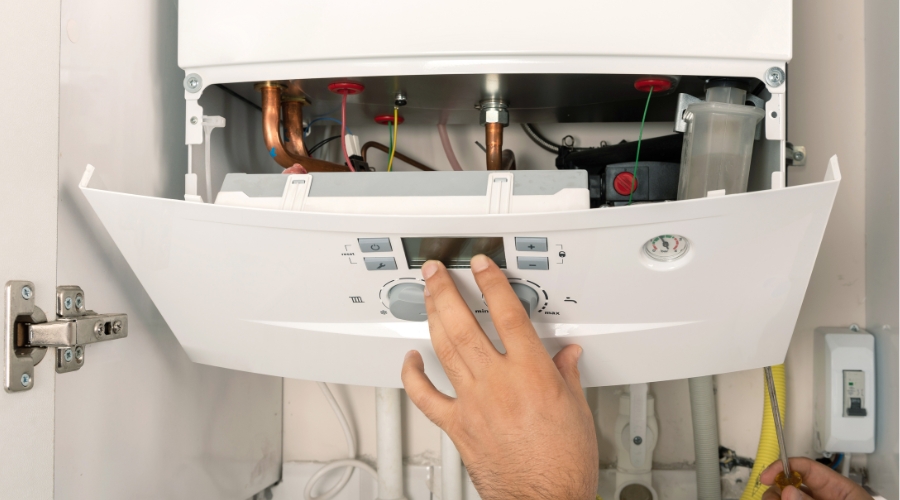
boiler

Quick Answer

If your boiler is not working, common causes include low pressure, thermostat issues, ignition failure, frozen condensate pipes, or circulation problems. Some issues are minor, while others require immediate repair to prevent heat loss or system damage. In colder climates like Waukesha and the surrounding Milwaukee area, boiler problems should be addressed quickly during winter months to avoid complete heating failure.


Fast Decision Guide

If you have no heat at all

A full system shutdown, especially during freezing temperatures, should be inspected as soon as possible.

If you’re comparing repair vs. replacement

Age, repair frequency, and efficiency usually determine whether repair or replacement makes more financial sense.

If you’re worried about safety

Leaks, unusual smells, banging noises, or pressure issues should never be ignored.


Local Trust Snapshot

  • Serving homeowners throughout Waukesha, Muskego, and surrounding areas
  • Licensed and insured HVAC technicians
  • Same-day service available for many heating issues
  • Emergency heating repair support during winter weather
  • Residential boiler and furnace repair expertise

Common Reasons a Boiler Stops Working

Boiler systems can stop working for several different reasons. Some are simple fixes, while others involve mechanical or circulation problems that require professional repair.

Low Boiler Pressure

Low pressure is one of the most common causes of boiler problems.

Signs may include:

  • No heat
  • Cold radiators
  • Error codes
  • Inconsistent heating

Pressure loss can happen because of leaks, bleeding radiators, or failing internal components.


Thermostat Problems

If the thermostat is not communicating properly with the boiler, the system may not turn on or maintain the correct temperature.

This can include:

  • Dead batteries
  • Wiring problems
  • Incorrect settings
  • Sensor failure

Ignition or Pilot Light Failure

Modern boilers rely on ignition systems to start heating cycles. If the ignition fails or the pilot light goes out, the boiler may stop producing heat entirely.

Possible causes include:

  • Dirty ignition components
  • Gas supply interruptions
  • Faulty thermocouples
  • Electrical failure

Frozen Condensate Pipe

In colder Wisconsin weather, condensate pipes can freeze and block drainage from the boiler system.

When this happens, many boilers automatically shut down as a safety precaution.

This issue becomes more common during extended cold snaps across the Milwaukee metropolitan area.


Circulator Pump Problems

The circulator pump moves heated water throughout the system. If it fails, you may notice:

  • Uneven heating
  • Loud noises
  • Hot and cold spots
  • Reduced system performance

Pump issues can worsen quickly if ignored.


When You Should Call a Professional

Some boiler problems should be inspected immediately to prevent system damage or complete heating loss.

Call for boiler repair if you notice:

  • No heat or hot water
  • Water leaking near the boiler
  • Loud banging or clanking noises
  • Constant pressure drops
  • Boiler repeatedly shutting off
  • Uneven heating throughout the home
  • Sudden increases in heating costs

If the system shuts down completely during freezing temperatures, emergency repair may be necessary.


What Boiler Repair Typically Includes

Professional boiler repair usually involves a full diagnostic inspection to identify the source of the problem.

Typical repair process

  1. Inspect boiler controls and thermostat
  2. Check pressure levels and circulation
  3. Test ignition and gas supply systems
  4. Inspect pumps, valves, and heat exchangers
  5. Identify leaks or damaged components
  6. Perform repairs and verify safe operation

The exact repair depends on the age, condition, and type of boiler system installed in the home.


Cost Factors for Boiler Repair in Waukesha

Boiler repair costs vary depending on the issue and the parts involved.

Factors that commonly affect cost include:

Factor Impact on Repair
Boiler age Older systems may require harder-to-find parts
Type of failure Ignition and circulation issues vary in complexity
Emergency timing After-hours service may affect pricing
System condition Deferred maintenance can increase repair scope

The most expensive repairs are often the result of small issues that were ignored for too long.


Common Boiler Mistakes Homeowners Make

Ignoring warning signs

Small noises or pressure changes can become larger mechanical failures.

Delaying maintenance

Routine inspections help identify worn components before winter demand increases.

Resetting the system repeatedly

Repeated resets without diagnosing the issue can sometimes worsen underlying problems.

Waiting until total failure

Calling earlier usually reduces both repair complexity and downtime.


How To Choose the Right Boiler Repair Company in Waukesha

When comparing heating companies, look for:

  • Licensed and insured technicians
  • Experience with boiler systems
  • Emergency repair availability
  • Strong local reviews
  • Clear communication and diagnosis
  • Maintenance support after repairs

Boiler systems require different expertise than standard forced-air furnaces, so experience matters.


Boiler Repair Service Areas

1st Choice Heating & Cooling provides heating and boiler repair services throughout:

  • Waukesha
  • Muskego
  • New Berlin
  • West Allis
  • Franklin
  • Nearby Milwaukee-area communities

FAQ

Why is my boiler running but not heating?

This can be caused by low pressure, circulation problems, thermostat issues, or air trapped in the system.

Can a frozen pipe stop a boiler from working?

Yes. Frozen condensate pipes can trigger a boiler safety shutdown during cold weather.

How long do boilers usually last?

Many residential boilers last 15–20 years with proper maintenance.

Is it safe to keep resetting my boiler?

Repeatedly resetting a boiler without diagnosing the issue is not recommended.

Why is my boiler making loud noises?

Banging or clanking noises may indicate pressure problems, trapped air, or circulation issues.

Should I repair or replace my boiler?

This depends on the system age, repair frequency, efficiency, and overall condition.

How often should a boiler be serviced?

Most systems should be professionally serviced once per year.

Can low pressure damage a boiler?

Low pressure can reduce performance and contribute to system strain if ignored.

What causes uneven heating in a home?

Circulation problems, trapped air, thermostat issues, or failing pumps can all contribute.

Do boiler repairs require emergency service?

Some do, especially during freezing temperatures or complete system shutdowns.


Boiler Repair in Waukesha & Milwaukee

Boiler problems rarely improve on their own. Addressing issues early can help prevent larger repairs, heating loss, and winter emergencies.

If you’re dealing with boiler or heating issues, explore Heating Repair Services or learn more about Heating Maintenance Services available throughout the Waukesha and Milwaukee area.

You can also view all Heating Services offered by 1st Choice Heating & Cooling.

Schedule Boiler Repair

If your boiler is not heating properly, the simplest next step is scheduling a professional inspection before the issue worsens.

Contact 1st Choice Heating & Cooling for boiler repair service in Waukesha and surrounding communities.

How To Choose the Right AC Size for Your Home in Waukesha & Milwaukee

Choosing the right AC size is one of the most important parts of a successful air conditioning installation. A system that’s too small will struggle to keep up during hot Wisconsin summers, while an oversized unit can create uneven cooling, short cycling, and higher energy bills.

At 1st Choice Heating & Cooling, we help homeowners throughout Waukesha and the surrounding Milwaukee metro choose AC systems that are properly sized for comfort, efficiency, and long-term performance.

Why AC Size Matters

Many homeowners assume a bigger AC system will cool the home better. In reality, the wrong size system can create expensive problems.

If Your AC Is Too Small

An undersized air conditioner may:

  • Run constantly during hot weather
  • Struggle to keep rooms cool
  • Increase energy costs
  • Wear out faster from overworking

If Your AC Is Too Large

An oversized system can:

  • Turn on and off too frequently
  • Create uneven temperatures
  • Leave humidity in the home
  • Increase long-term wear on components

Proper sizing helps your system run efficiently while keeping indoor temperatures consistent.

Factors That Affect AC Sizing

Several factors determine the right AC size for a home.

Home Square Footage

Larger homes typically require larger cooling systems, but square footage alone does not determine sizing.

Insulation Quality

Homes with poor insulation often require more cooling power because conditioned air escapes more easily.

Number of Windows

Large windows and direct sunlight can significantly increase indoor heat during summer.

Ceiling Height

Homes with vaulted or high ceilings contain more air volume, which affects cooling demand.

Home Layout

Open floor plans, multi-story homes, and room placement can all impact airflow and cooling performance.

How HVAC Professionals Determine the Right AC Size

Professional HVAC sizing goes beyond simple square footage estimates.

At 1st Choice Heating & Cooling, technicians perform load calculations to determine the right cooling capacity for your home. This process evaluates:

  • Home size
  • Insulation levels
  • Sun exposure
  • Ductwork
  • Airflow
  • Occupancy patterns

This helps prevent comfort issues and improves long-term efficiency.

Signs Your Current AC May Be the Wrong Size

You may have an improperly sized system if you notice:

  • Uneven cooling between rooms
  • Constant system cycling
  • High summer utility bills
  • Excess indoor humidity
  • The AC running nonstop during hot days

If your current system struggles during peak summer temperatures, it may be time to evaluate whether the unit was sized correctly.

AC Installation in Waukesha & Milwaukee

Choosing the right system size is one of the most important parts of a successful installation. A properly sized AC system helps improve comfort, reduce energy costs, and extend equipment lifespan.

If you’re considering a new cooling system, learn more about AC Installation Services or explore AC Repair Services if your current unit is struggling to keep up.

You can also view all Air Conditioning Services available throughout the Waukesha and Milwaukee metro areas.

Schedule an AC Installation Estimate

Not sure what size AC system your home needs?

Contact 1st Choice Heating & Cooling today to schedule an AC installation estimate in Waukesha, Muskego, and surrounding areas.